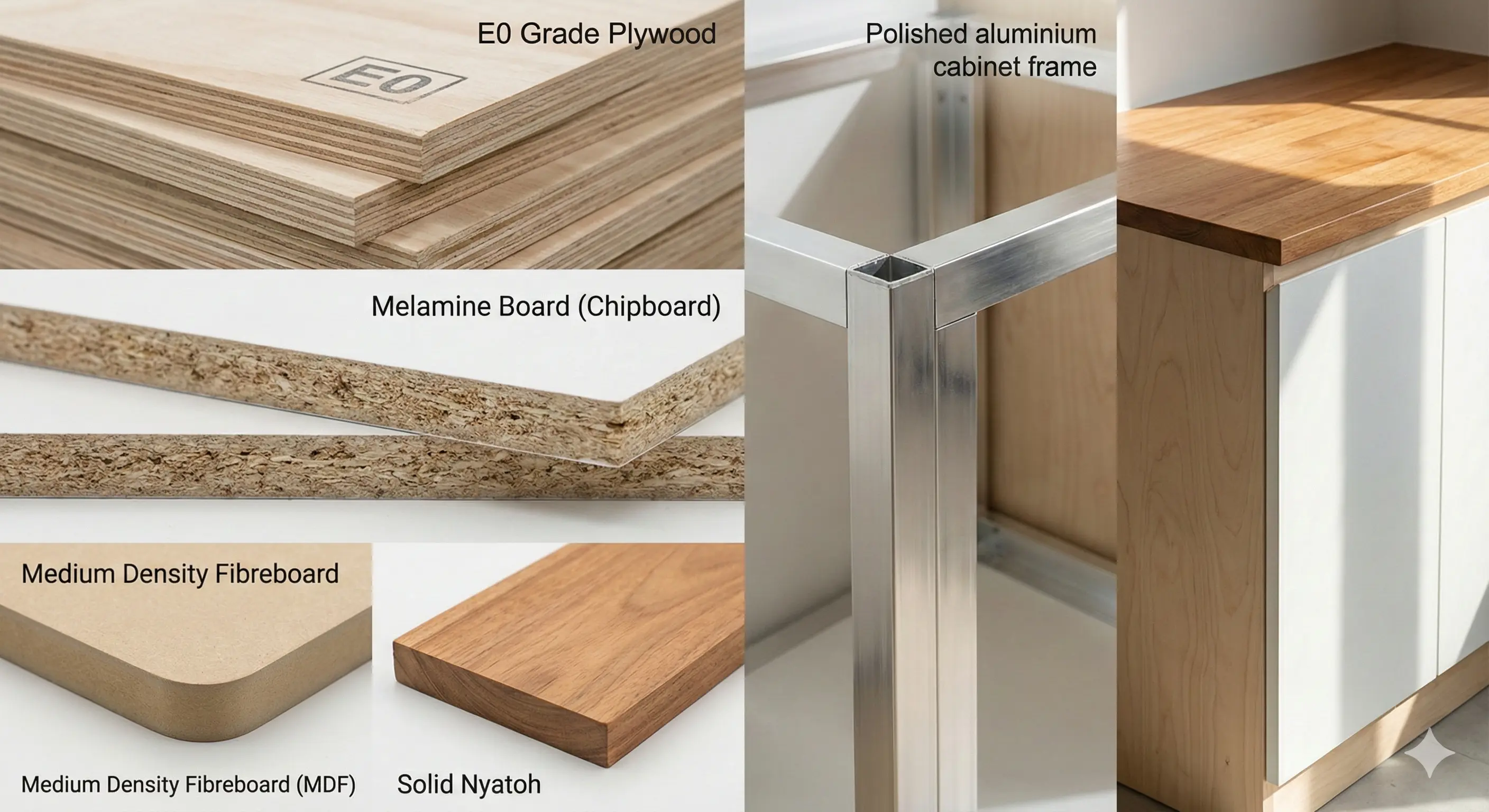
When customizing furniture, whether it’s a dream kitchen, a built-in wardrobe, or a sleek TV console, most homeowners obsess over the outer colors and finishes.
But the most important decision is actually invisible: the core material inside.
If you are trying to choose the right kitchen cabinet material, you need to look beyond the surface. The core determines if your cabinet will swell when a pipe leaks, sag under the weight of your books, or slowly release harmful chemicals.
At Fatt Interior, we offer a wide range of options, but our top recommendation for kitchen cabinet materials in Malaysia is E0 Grade Plywood.
Here is the definitive guide to understanding the popular kitchen cabinet materials, their pros and cons, and which one fits your home.
What is the best material for kitchen cabinets in Malaysia?
For most Malaysian homes, the answer is a plywood carcass with a high-pressure laminate (HPL) finish. That is the combination we recommend to almost every customer and the one we build in our own workshop in Seremban. The plywood does the structural work: it holds hinge screws, keeps long shelves flat and copes with a wet kitchen floor. The laminate does the surface work: it takes knocks from pots, daily wiping with detergent and the Malaysian sun through a kitchen window without fading quickly.
The other cores all have a place, and the sections below go through them honestly. Melamine chipboard is the budget option for a dry kitchen. MDF is for painted doors in dry rooms. Solid wood is a look rather than a practical kitchen carcass. Aluminium solves water but brings its own compromises. If you only read one line of this guide, read this one: choose the core for the wettest corner of the room, which is almost always the cabinet under the sink.
| If your kitchen is... | Core we would suggest | Finish we would suggest |
|---|---|---|
| A wet kitchen with heavy cooking | Plywood | HPL laminate |
| A dry kitchen or pantry | Plywood, or melamine chipboard on a tight budget | HPL laminate or the melamine face |
| Painted, handleless doors in a dry room | Plywood carcass, MDF doors | Spray paint on the MDF doors |
1. Why does Fatt Interior build in E0 plywood?
Because it is the only wood based core that holds a screw hard, stays flat across a long run, and survives a wet kitchen floor without going soft. A carcass has to keep doing all three for the life of the kitchen, and plywood is the cheapest board that manages it.
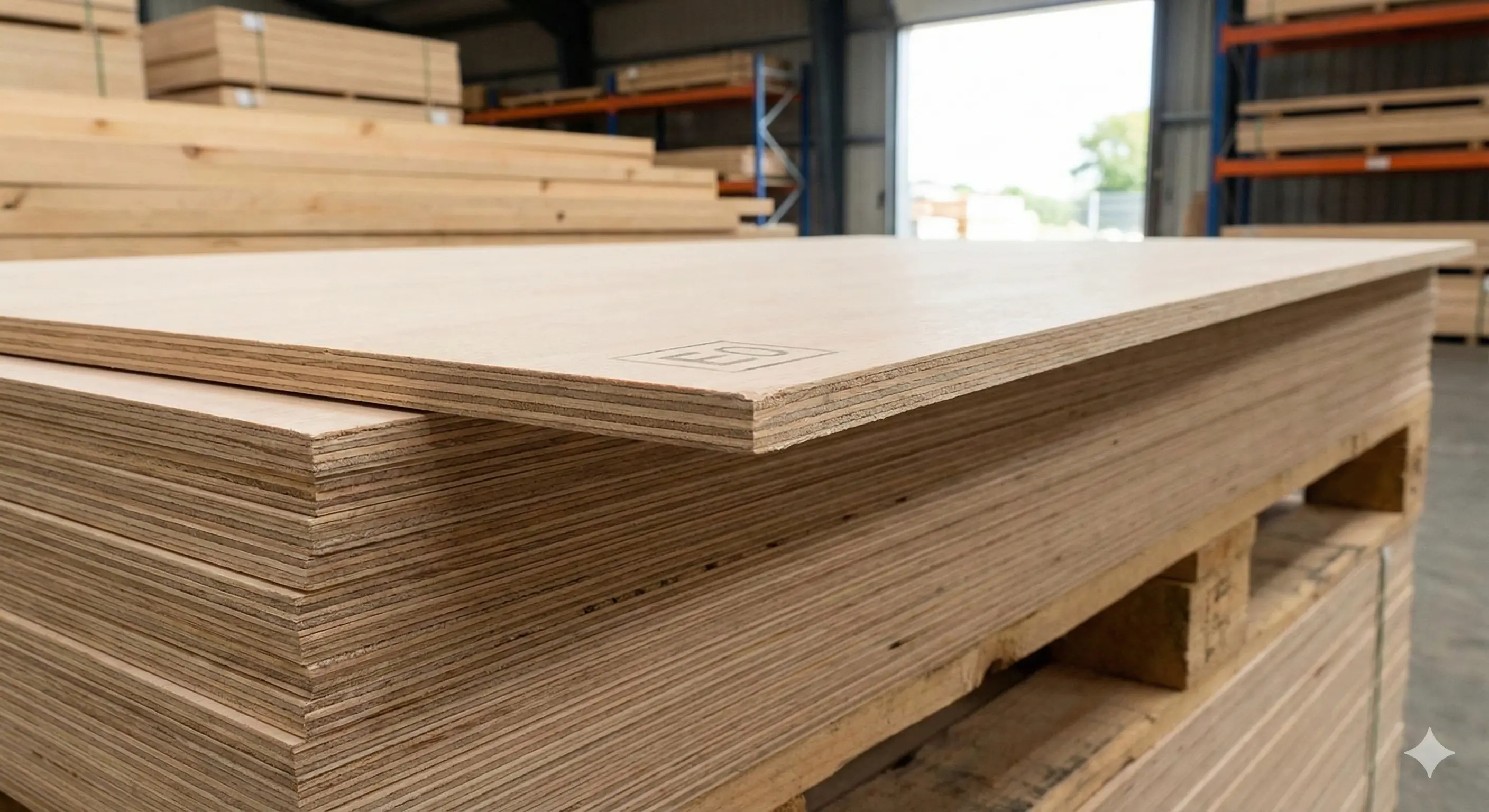
What is it?
Plywood is engineered by gluing thin layers of wood (veneers) together, with the grain of each layer running at alternating right angles. This cross-graining technique creates a board that is incredibly tough.
Why We Prefer It (The Pros)
- 💧 Resists Moisture Damage: In Malaysia's humid climate, water resistance is key. Quality plywood handles occasional splashes in a wet kitchen far better than chipboard. It does not swell easily, making it a high quality choice for long term durability.
- 💪 High Strength: It bites into screws tightly. Your cabinet doors won't become loose and hinges won't wobble after years of use.
- 🍃 Healthier Home (E0/SE0): We advocate for E0 Grade Plywood. This refers to the formaldehyde safety level. E0 means the material releases almost zero harmful chemicals, making it safe for families.
The Trade-off (Cons)
- Cost: It is more expensive than standard Melamine, but the longevity makes it worth it.
What a cut edge tells you. Every board is strong across its face and vulnerable where the saw went through. Plywood has the smallest gap between the two. Water entering an exposed plywood edge travels slowly and stays local, so a panel that has been damp for a while usually dries out and carries on working. That is the real difference behind the star rating further down, and it is why plywood is our default carcass on kitchen cabinet work and on tall wardrobe runs, where a sagging shelf is the first thing anybody notices.
2. Is melamine board good enough for a kitchen?
In a dry kitchen, yes. In a wet kitchen, only if you accept that its edges are the whole story. The printed melamine face is genuinely hard wearing, and almost everything that kills a melamine cabinet happens at a cut edge rather than on the part you touch every day.
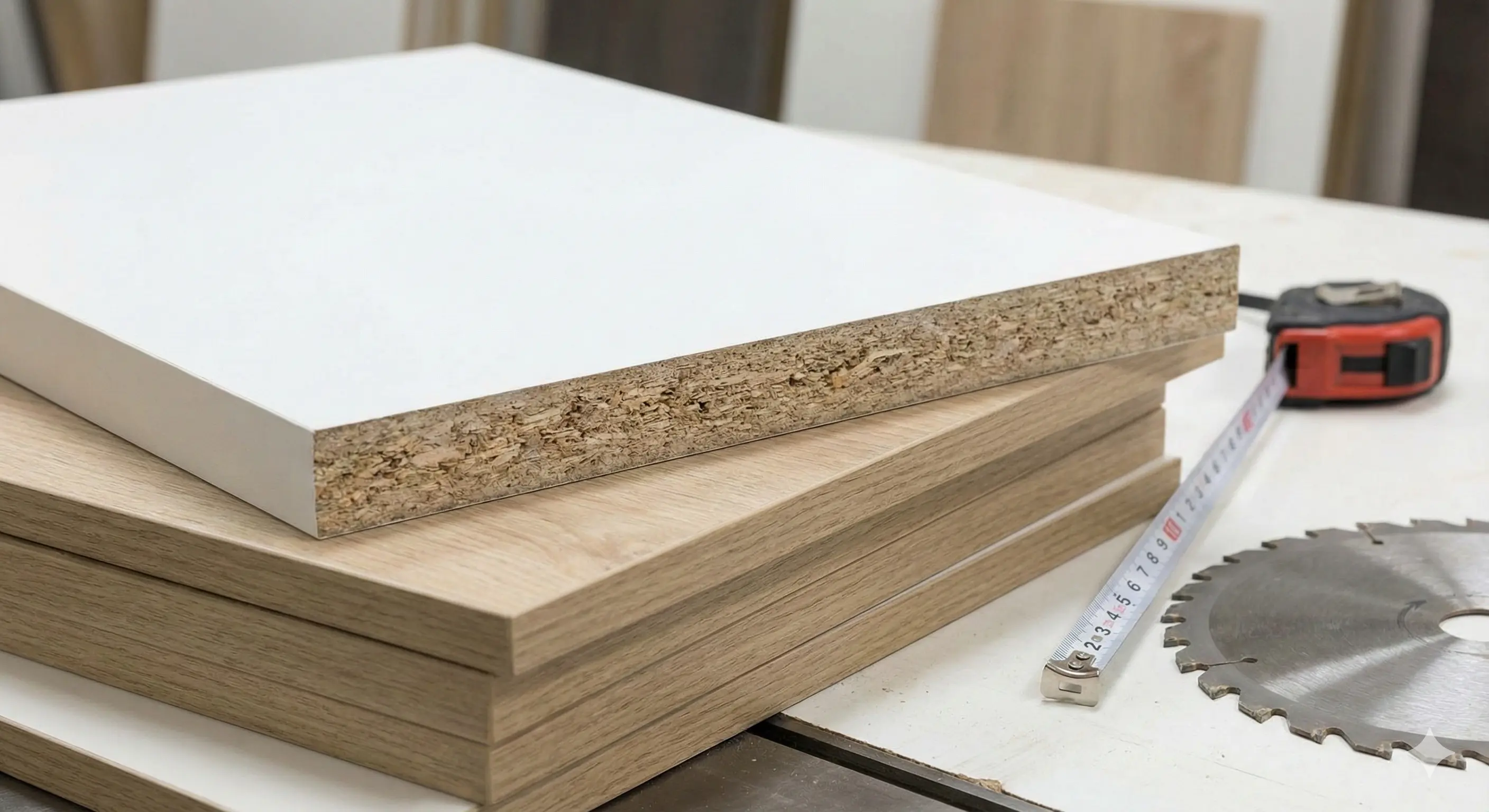
What is it?
Also known as Particle Board. It is made by compressing wood chips and resin binder. It usually comes pre-laminated with a white or wood-grain surface.
Why Some Choose It (Pros)
- Budget Friendly: For budget conscious homeowners, this is the most affordable option on the market.
- Variety: It comes in a vast array of colors and textures ready to use.
The Trade-off (Cons)
- Water Sensitivity: This is its biggest weakness. If the edges are not properly sealed, water can penetrate the core, causing the internal chips to swell like a wet biscuit. It is prone to water damage in wet areas.
- Durability: Screws can loosen over time if doors are opened frequently.
Screws and leaks. A screw driven into the flat face of chipboard grips well enough. A screw driven into its cut edge is gripping loose chips and glue, which is why hinge plates and shelf pins pull free on chipboard long before the door finish starts to look tired. Leaks are the other half of it. Once water reaches the chips they swell, and they never shrink back, so a swollen panel cannot be dried and reused, it has to be cut out and replaced. The edge that decides all of this is the one nobody photographs: the underside of the base panel inside the sink cabinet, right beside the pipe cut out. Left raw, it drinks quietly for months before the door starts to sit wrong.
3. Where does MDF actually belong in a house?
On a sprayed door in a dry room, and almost nowhere else. MDF gives the flattest paintable surface of any board sold here, which is exactly what a high gloss or routed door needs, and it is the weakest of this group at living anywhere near water.
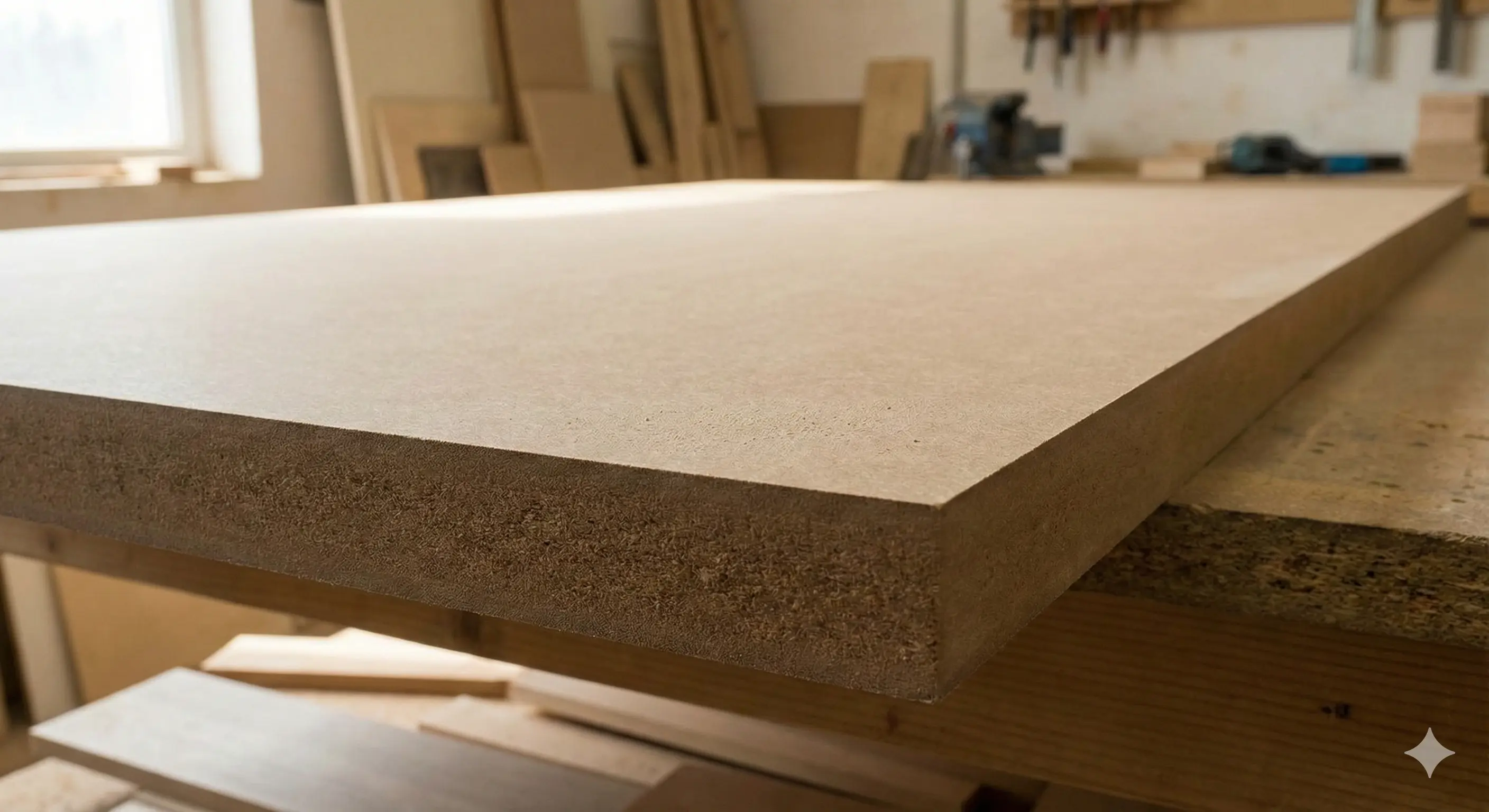
What is it?
MDF is made by breaking down wood residuals into fine fibers and combining them with wax and resin. It is denser and smoother than plywood.
Why Some Choose It (Pros)
- Sleek Modern Finish: It has a perfectly smooth surface with no grain, making it the ideal base for high-gloss spray paint or sleek modern designs.
- Easy to Shape: It is often used for decorative doors with routed designs (like wainscoting).
The Trade-off (Cons)
- Water Sponge: It soaks up water rapidly. Once wet, it expands significantly and cannot be repaired.
- Heavy: It is very dense, which can put extra strain on cabinet hinges.
How it fails. MDF has no grain and no layers, so it routs cleanly, and it also has nothing inside it to slow water down. A wet MDF edge does not so much swell as pulp: it goes soft, loses its shape, and stops holding the screw that was in it. On screw holding it sits in the middle of this group, better than chipboard through the face and worse than plywood through the edge. Keep it above the splash line, keep it out of the sink cabinet, and keep it away from the door a mop leans against.
4. Is solid wood worth it for Nyatoh or teak?
It is worth it for doors, frames and anything you may want to sand back years later, and it is the wrong choice for one large flat panel. Solid wood keeps moving with the weather, and the wider the board, the more obvious that movement becomes.
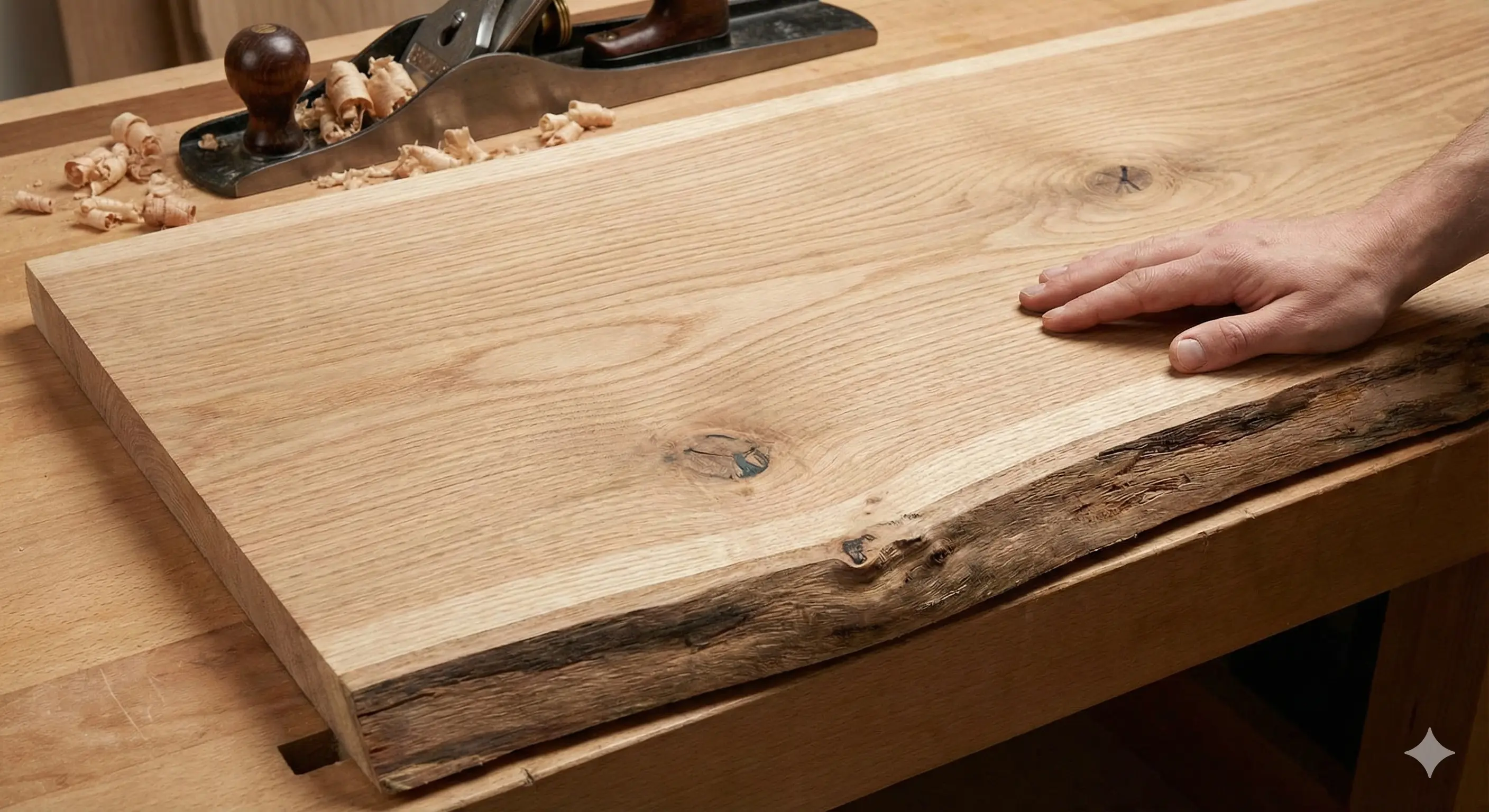
What is it?
Natural wood cut directly from trees. In Malaysia, Nyatoh is a popular choice for classic styles.
Why Some Choose It (Pros)
- Aesthetics: Nothing beats the grain and prestige of solid wood.
- Repairable: Dents and scratches can be sanded down and refinished.
The Trade-off (Cons)
- Maintenance: Real wood expands and contracts, which can lead to warping.
- Termites: It requires treatment to prevent termite attacks.
Why doors are built as frames. In Seremban humidity a wide solid panel will eventually cup or open a joint, which is why a traditional cabinet door is a frame with a panel floating inside it rather than a single slab. Against everything else on this list, solid wood grips a screw hardest, and it is the only material here you can genuinely repair: a dent sands out, a scorch sands out, and a tired joint can be knocked apart and glued again. It still wants treatment against termites, and it dislikes standing water as much as plywood does. Our custom furniture work usually pairs a solid frame with a plywood carcass for exactly this reason.
5. Should you go aluminium in a wet kitchen?
If the room really does get hosed and mopped, aluminium is the one carcass that does not care, and it will always feel like what it is. It cannot swell, it cannot rot and termites have no interest in it, so the only failure modes left are cosmetic ones.
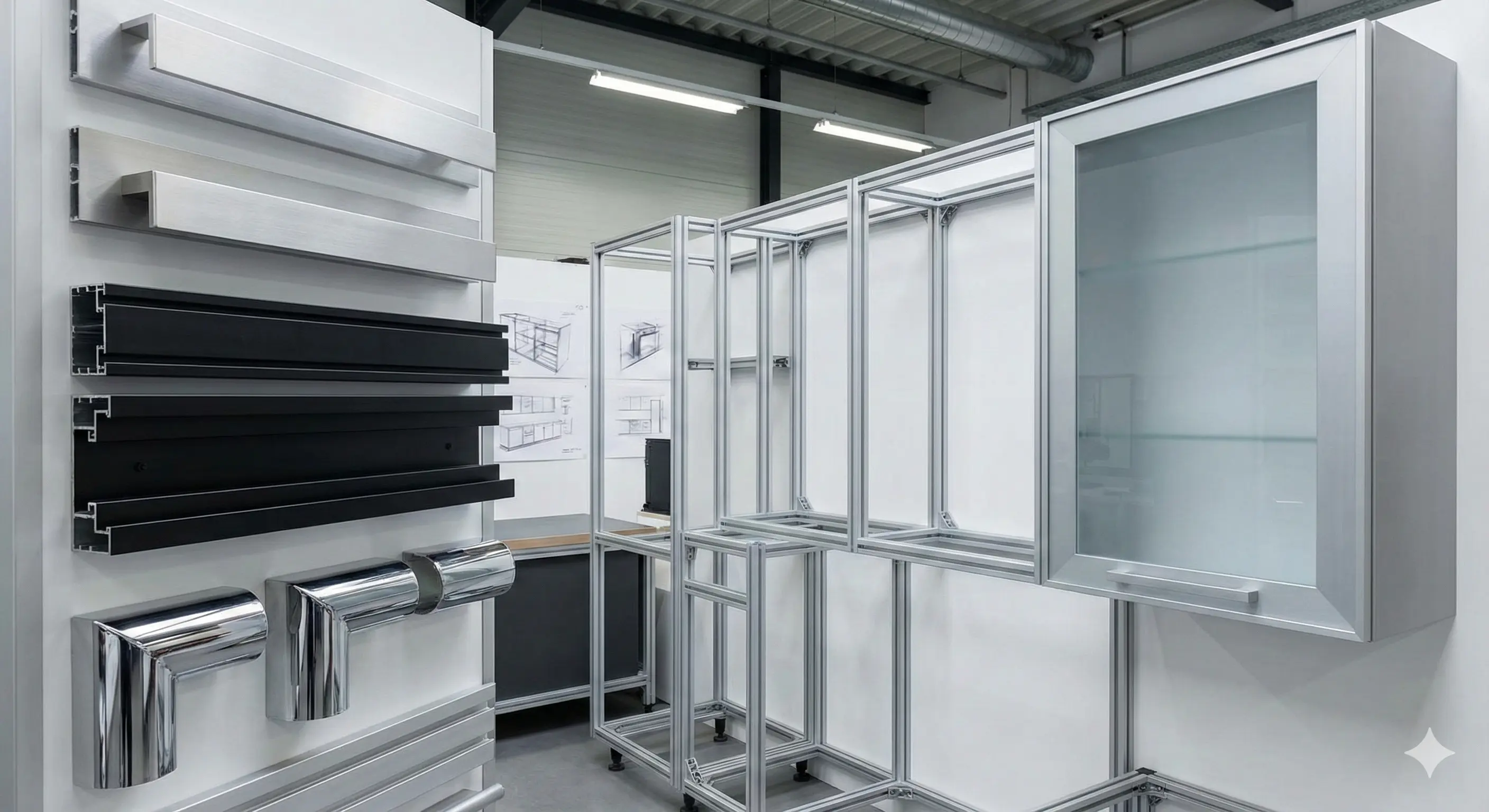
What is it?
Cabinet carcasses made entirely from metal.
Why Some Choose It (Pros)
- Indestructible: It is 100% waterproof and termite-proof.
The Trade-off (Cons)
- Feel: It can feel cold and industrial ("noisy") compared to wood-based products.
- Scratching: The finish can scratch and dent.
Why we do not build aluminium. Fatt Interior does not make aluminium cabinets. We are a timber workshop, and we would rather tell you that plainly than subcontract a kind of cabinet we do not make ourselves. If your wet kitchen really is washed down with a hose, an aluminium specialist is the right call. For a wet kitchen that is cooked in, mopped and wiped, a plywood carcass with a laminate finish and properly sealed cut edges does the job, and it feels like furniture rather than equipment.
The part people forget. An aluminium carcass is usually fitted with board doors, and a board door in a wet kitchen fails on the same schedule it always would, so buying aluminium for the water only helps if the doors are chosen for the water too. Aluminium also does not take a screw the way timber does. Fixings land in the extrusion or in a backing piece, which makes moving a shelf or swapping a hinge later a more deliberate job than it is on a plywood box.
What is laminate, and how is it different from melamine?
Both are decorative paper faces bonded to a board, and both come in the same kind of wood grains and plain colours, which is why they get confused. The difference is how they are made and how thick they are. A melamine face is a single sheet of resin-soaked paper pressed straight onto chipboard at the board factory. High-pressure laminate (HPL) is several layers of paper pressed together under much higher pressure into a separate sheet, usually under a millimetre thick, which is then glued onto plywood in the workshop.
That extra thickness is what you pay for. HPL resists scratches, dents from a dropped pot and heat from a hot pan handle noticeably better than a melamine face, and the edges can be finished with matching edge banding. Because the laminate is glued on by the workshop, it can also go onto plywood, which is not possible with a factory melamine face. That is exactly why plywood with laminate is our standard build: a strong, water-tolerant core with a hard-wearing face.
| Melamine face | HPL laminate | |
|---|---|---|
| What it is | One resin-soaked paper sheet pressed onto chipboard | Several paper layers pressed into a sheet under high pressure |
| Usual core | Chipboard (particleboard) | Plywood or chipboard, glued in the workshop |
| Scratch and impact resistance | Fair | Good |
| Where it suits | Dry kitchens, wardrobes on a budget | Kitchens, wet or dry, and heavy-use doors |
What do E0, E1 and Super E0 actually mean?
They are formaldehyde emission grades. Most boards used in cabinets, including plywood, chipboard and MDF, are bonded with glues that release a small amount of formaldehyde into the room, most of it in the first months. The grade tells you how much a sample released under a laboratory test. E1 is the long-standing baseline for indoor furniture in Europe. E0 is a lower-emission grade, and Super E0 is a trade label for boards that emit less again.
The catch is that these labels are not one worldwide standard. Chinese, European and Japanese test methods measure emission differently, and some suppliers print E0 or Super E0 on a board without saying which test it passed. So treat the label as a starting point, not a guarantee. Ask for the test standard and the measured figure, keep new cabinets ventilated for the first few weeks, and remember that the edges matter here too: sealed edges release less than raw cut edges.
How do you keep a cabinet carcass alive?
Keep water away from the cut edges and the rest is ordinary housekeeping. Cabinets rarely die from the surface you look at, they die from an edge you cannot see, so most of the maintenance worth doing is really about finding water early.
Choosing the right material is only half the battle. To ensure your cabinets last, you must also understand the regular cleaning each surface asks for.
- Easy to Clean: Melamine and Quartz surfaces are generally the easiest to wipe down.
- Keep it Dry: Regardless of material, always wipe up spills immediately to prevent moisture damage.
- Check Seals: Ensure your sink area is properly sealed with silicone to stop water from seeping into the cabinet carcass.
Two habits do most of the work. Every so often, empty the sink cabinet, run a hand along the base panel and around the pipe cut out, and feel for damp. Board that is beginning to go feels wrong before it looks wrong. And whenever a tap or a trap gets replaced, ask for the cut out to be sealed again afterwards, because the old silicone has to be cut away to get the fitting out and it is almost never put back.
Summary Comparison Table
| Material | Water Resistance | Strength | Formaldehyde Safety | Cost | Best Use Case |
|---|---|---|---|---|---|
| Plywood (E0) | ⭐⭐⭐⭐ | ⭐⭐⭐⭐⭐ | ⭐⭐⭐⭐⭐ | $$$ | All Areas (Recommended) |
| Melamine | ⭐⭐ | ⭐⭐⭐ | ⭐⭐⭐ | $ | Dry Kitchen (Budget) |
| MDF | ⭐ | ⭐⭐⭐ | ⭐⭐⭐ | $$ | Spray Paint / Dry Areas |
| Solid Wood | ⭐⭐⭐ | ⭐⭐⭐⭐ | ⭐⭐⭐⭐⭐ | $$$$$ | Classic Luxury |
| Aluminium | ⭐⭐⭐⭐⭐ | ⭐⭐⭐⭐⭐ | ⭐⭐⭐⭐⭐ | $$$$ | Heavy Duty Wet Kitchen |
Conclusion
While every material has its place, Fatt Interior recommends an E0 plywood carcass with an HPL laminate finish. It strikes the right balance between durability, water resistance and a low-emission home, and it is what we build every day.
Planning a full home makeover? Don't miss the big picture. Check out our Ultimate Guide to Custom Cabinets & Renovation for a step-by-step walkthrough.
Don't gamble with the core of your home. We have no showroom, but you are welcome at the workshop in Seremban to see plywood, laminate and chipboard side by side on the bench. Message us first so someone is there rather than out on an install.