Hire an interior designer when you still need someone to decide the layout and look, a renovation contractor when the decisions are made and the job is building work like hacking, wiring and tiling, and a carpentry workshop when the job is mainly cabinets and wardrobes. Many homes need two of the three. The right mix depends on how much is changing and how much of the coordination you want to handle yourself.
In short:
- Interior designer (ID firm): plans and designs, and often manages the build through its own contractors.
- Renovation contractor: builds and coordinates the trades on site.
- Carpentry workshop: makes and installs kitchen cabinets, wardrobes and built-ins.
- Only cabinets and wardrobes? A workshop can usually handle it directly.
- Hacking, plumbing and rewiring? You need a contractor or a design-and-build firm to run the site.
What is the difference between an interior designer, a contractor and a carpentry workshop?
An interior designer sells design decisions, a renovation contractor sells building work, and a carpentry workshop sells fitted furniture it makes itself. In Malaysia the lines blur, because many ID firms also build and many contractors offer basic design. Look at what each one is actually responsible for.
| Interior designer (ID firm) | Renovation contractor | Carpentry workshop | |
|---|---|---|---|
| Main job | Layout, style, materials, drawings | Hacking, plumbing, wiring, tiling, ceiling, painting | Kitchen cabinets, wardrobes, TV walls, built-ins |
| Who builds | Its own team or contractors it appoints | Its own workers and subcontractors | The workshop itself |
| How you pay | Design fee, or one design-and-build lump sum | Quotation by line item or by job | Quotation per running foot or per piece |
| Best when | Layout or style is still open | Decisions are made, lots of building work | Scope is carpentry only |
| Watch out for | Design cost hidden in the build price | Their default details if your brief is vague | Nobody coordinates the other trades for you |
When do you actually need an interior designer?
You need an interior designer when the layout is changing or you cannot picture the finished space and want it fixed on paper before spending on building. A good ID works out where walls move, how the wet and dry kitchen split, where every socket and light goes, and which materials go in which room.
That work prevents expensive mistakes. A fridge door that hits a wall, a hob too close to a window, or a wardrobe blocking a door swing are all cheap to fix on a drawing and costly to fix on site.
An ID is also worth it when you have little time. A design-and-build firm gives you one contract and one person to chase for everything, from the first drawing to handover. For a busy family doing a whole house, that convenience has real value.
When is a renovation contractor the right choice?
A renovation contractor is the right choice when your decisions are already made and the remaining work is building: hacking walls, moving plumbing, rewiring, tiling, plaster ceilings and painting. The contractor brings the trades, buys the materials, supervises the site and puts the work in the right order.
The contractor needs a clear brief. Give them a floor plan with measurements, photos of finishes you like, your socket and light positions, and your appliance sizes. A vague brief gets their standard details, and changes after work starts usually come back as variation orders.
For a detailed list of what to check before you sign, read our guide on how to choose a renovation contractor.
When can you go straight to a carpentry workshop?
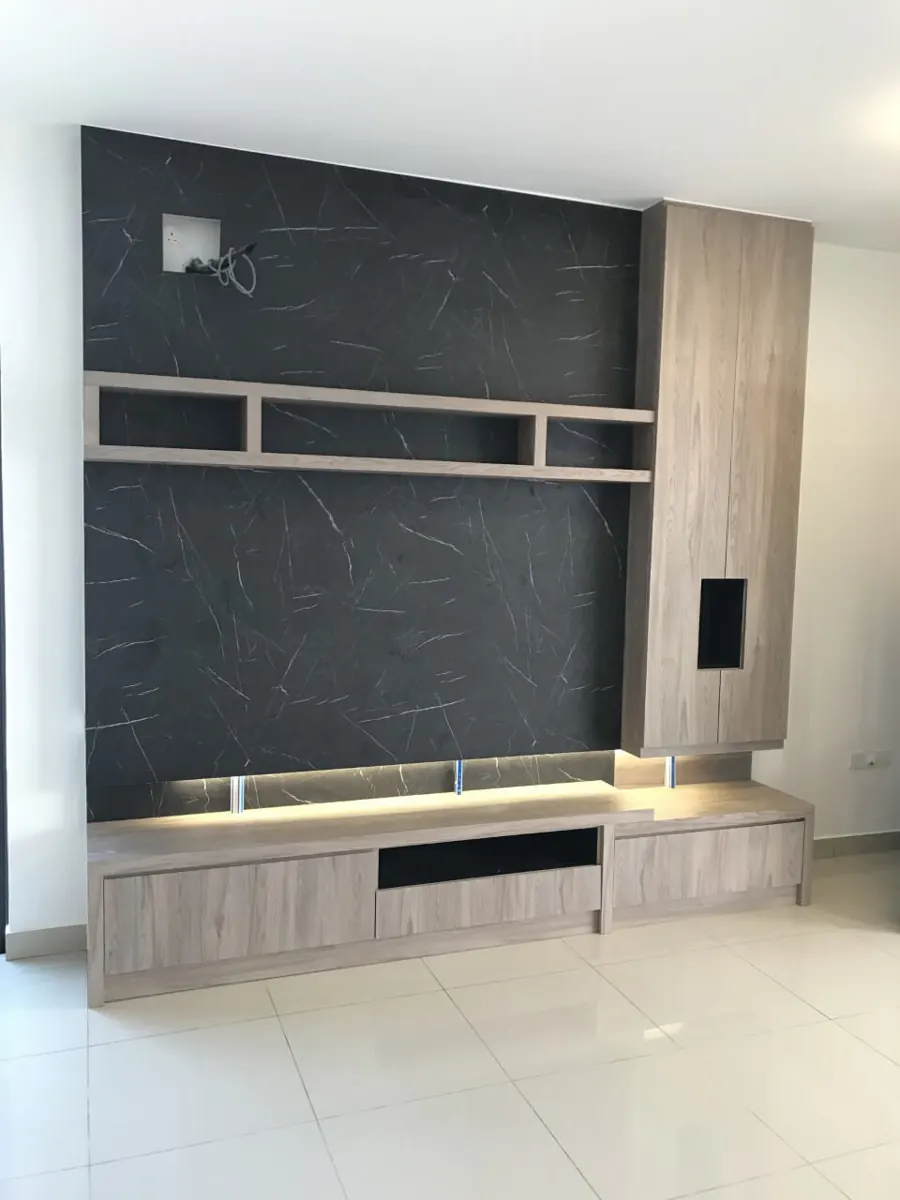
You can go straight to a carpentry workshop when the job is self-contained carpentry: a new kitchen on existing plumbing, built-in wardrobes, a TV feature wall, shoe cabinets or a study desk. The workshop measures, draws the cabinets, makes them and installs them, so there is no middle layer between you and the people building.
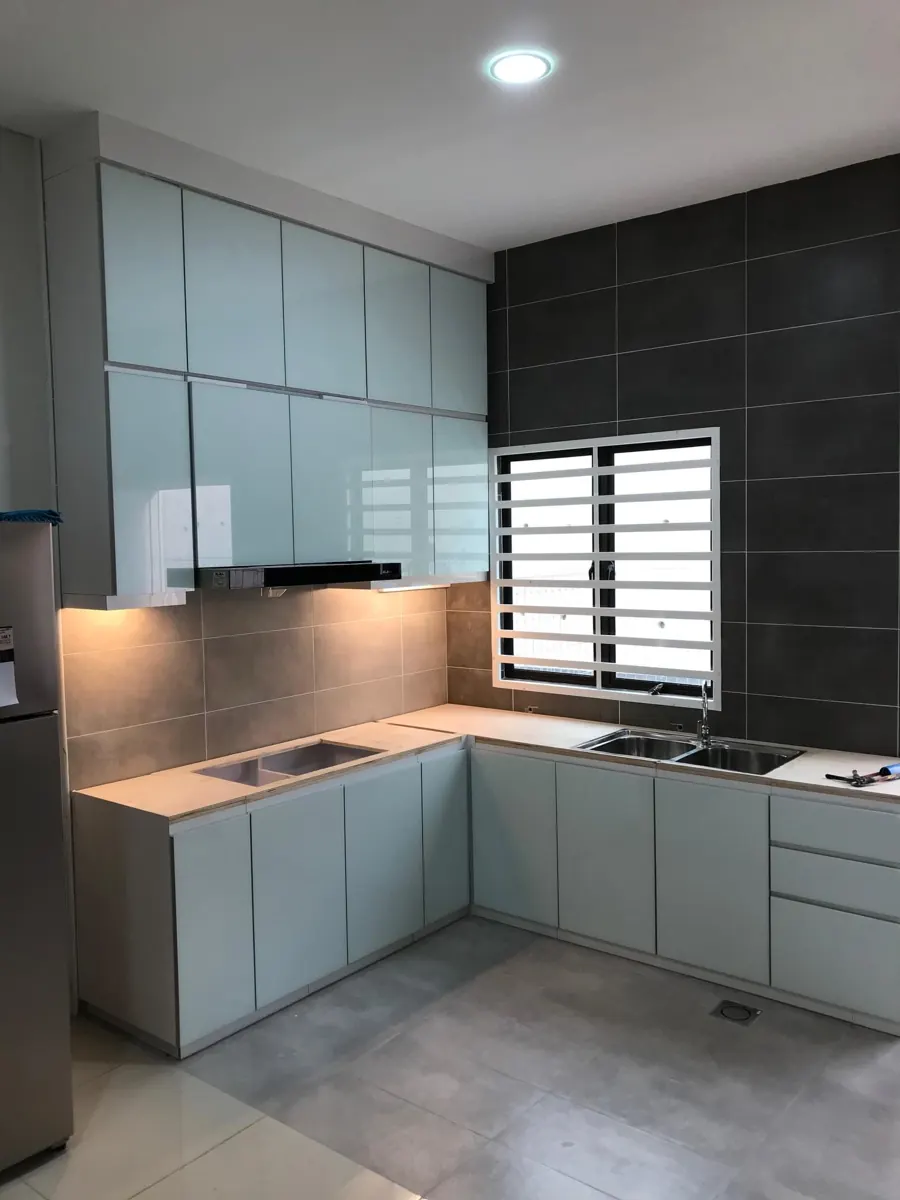
Going direct makes the most sense on a house where the walls, tiles and wiring are already fine. The workshop does have limits. It does not hack walls, lay tiles or move pipes, so if those trades are needed, someone still has to book them in the right order. Our post on buying factory-direct explains what you gain and what you take on when you skip the middle layer.
How does each one charge?
Interior designers usually charge a flat design fee, a rate per square foot of the area designed, or a percentage of the build value. Contractors quote line by line for the work on your list. Carpentry workshops quote per running foot of cabinet or per piece of furniture.
Each method hides something different:
- Percentage design fees rise as the build gets bigger, and the designer is also the one specifying the build.
- Design-and-build lump sums mix design, building and margin into one figure, so you cannot compare them line by line with a contractor's quote unless the firm splits them out.
- Contractor quotations cover only what is written. The exclusion list matters as much as the total.
- Workshop quotations cover the carpentry only, not the tiler, plumber or electrician around it.
Published market ranges give you a sense check. AmpQuartz (2026) lists solid plywood cabinets at RM330 to RM600 per running foot. PropertyGuru Malaysia's 2026 built-in furniture guide puts basic built-ins at RM3,000 to RM6,000 per piece. PropertyGuru Malaysia's 2026 renovation guide also advises keeping 10% to 20% of the total budget as a contingency, whichever route you pick.
Which one fits your job?
The scope of the work decides it more than the budget does. Here are three common jobs and what usually fits each.
| Your job | Usually fits | Why |
|---|---|---|
| New kitchen cabinets and wardrobes only, plumbing stays | Carpentry workshop directly | One trade, simple sequence, no middle margin |
| Whole new house, keys just received | ID firm, or a workshop plus a clear plan you make yourself | Many rooms to plan at once; light building work |
| Older terrace with hacking, new wiring and plumbing | Renovation contractor or design-and-build firm, with a workshop for the carpentry | Several trades must follow each other in order |
Kitchen and wardrobes only. If the room layout stays and the plumbing points stay, the decisions are small enough to make with the workshop directly. As a guide, our small 10-ft kitchens (base plus wall units, laminate worktop) begin at roughly RM 9,000. An L-shape or a bigger room with a quartz or sintered stone top usually lands between RM15,000 and RM50,000, set mostly by length and the top you choose.
Whole new house. New houses usually need little hacking, but every room needs furniture, lighting and a plan. An ID is useful if you want one consistent look and do not have time to decide room by room. If you are happy to decide yourself, a workshop can plan the carpentry for the whole house as one job, and you book a wireman for extra points. See our custom furniture page for the pieces this usually covers.
Older terrace with hacking. Once walls come down and pipes and wiring move, the order of works matters most. Somebody has to hold that order, and unless you have the time, that person should be a contractor or a design-and-build firm. A workshop then fits the carpentry into their schedule after the tiling and ceiling are done.
What should you ask before paying a deposit?
Before you pay anyone a deposit, get the scope, exclusions and payment schedule in writing. These questions apply to ID firms, contractors and workshops alike:
- What is the SSM registration number of the company?
- What exactly is included, and what is excluded?
- Which trades are subcontracted, and to whom?
- Is each payment tied to a finished stage, not a calendar date?
- How is a variation order priced, and is it signed before extra work starts?
- Who repairs damage when a later trade marks finished work?
- Who buys and stores the materials until installation?
- For carpentry: what board is the carcass, and what is the finish?
If any answer is vague, ask for it in writing. A firm that is clear about its own scope will have no trouble giving you these.
Not sure which one you need?
Share a floor plan, or some photos plus rough sizes, and we will tell you plainly whether your job suits a workshop like ours or needs a contractor first. Fatt Interior makes kitchens, wardrobes and built-ins in our own workshop in Galla Industrial Park, and we take the carpentry for whole-house renovations too. WhatsApp us or read more about our carpentry work in Seremban.
Common questions about this topic
Do I need an interior designer or a contractor for my renovation in Malaysia?
Hire an interior designer when the layout, style or finishes are still undecided and you want them settled on paper first. Hire a renovation contractor when the decisions are made and the job is mainly building: hacking, plumbing, wiring, tiling and ceiling. If the work is only cabinets and wardrobes, a carpentry workshop can usually quote and build directly.
How do interior designers in Malaysia charge?
Most ID firms charge in one of three ways: a flat design fee, a rate per square foot of the area designed, or a percentage of the build value. Some design-and-build firms fold the design cost into one lump-sum quotation. Ask which method applies and what is included, such as drawings, 3D views and site visits, before you agree.
Can I skip the interior designer and go straight to a contractor?
Yes, if you can give the contractor a clear written brief: layout, finishes, socket positions and appliance sizes. Without that, the contractor builds their usual detailing, and changes made after work starts are usually charged as variation orders. Photos of designs you like and a simple floor plan with measurements help a lot.
Is it cheaper to hire a carpentry workshop directly for kitchen cabinets?
It often is, because there is no middle layer adding a margin on top of the workshop's price. For a sense of the market, AmpQuartz (2026) lists solid plywood cabinets at RM330 to RM600 per running foot. The trade-off is that a workshop only covers the carpentry, so plumbing, tiling and electrical work stay your job to arrange.
Who is responsible if one trade damages another trade's work?
Under one main contract, the main firm is responsible, because it appointed both trades. If you hired each trade yourself, sorting out the damage falls to you. Put a short clause in each separate agreement saying who repairs damage to finished work, and agree the order of works before anyone starts on site.