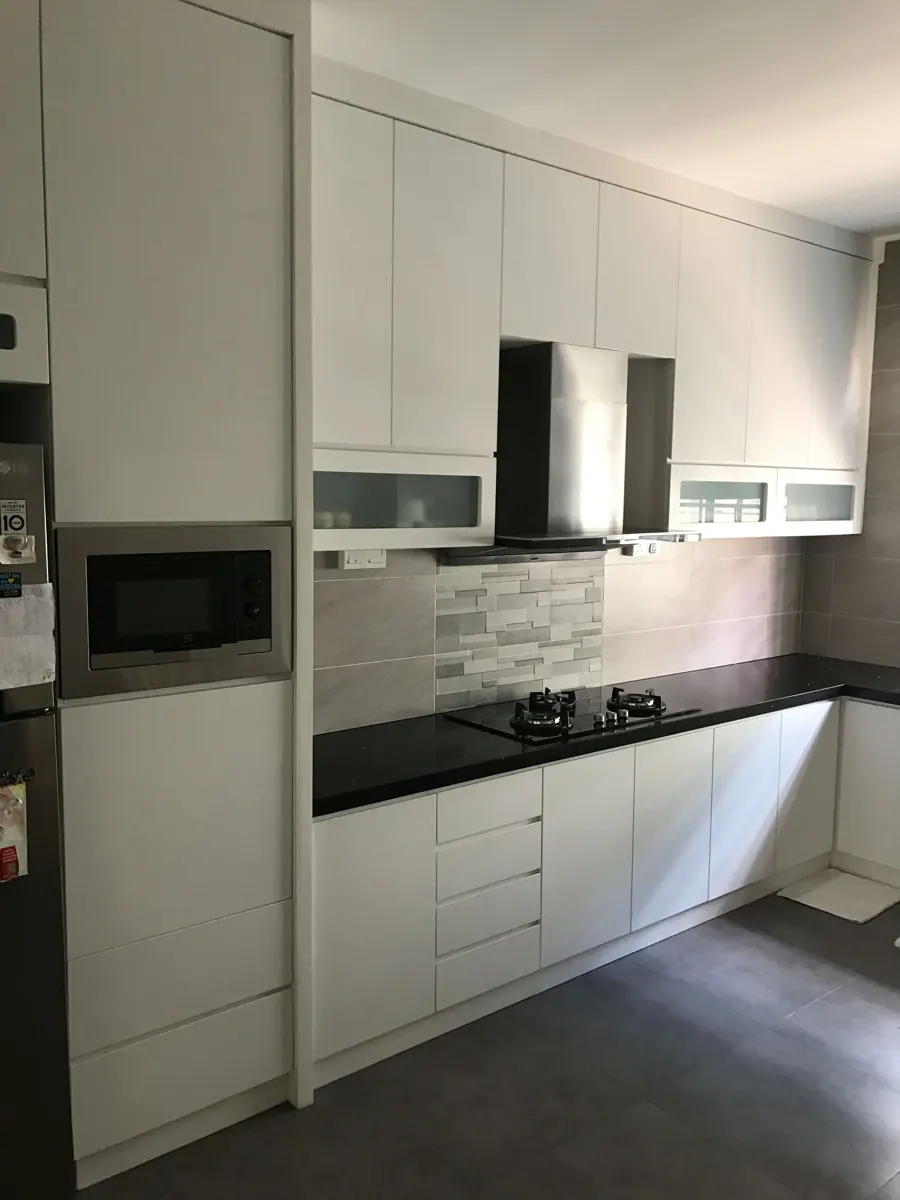
Choose a renovation contractor by comparing what each quotation actually covers, not the total at the bottom. Give every contractor the same written scope, ask for itemised quotations with quantities and rates, check that the company is registered, and pay in stages against finished work.
In short:
- Write your own scope list first and send the same list to every contractor.
- Check the SSM registration, and match the company name to the quotation and the bank account.
- Reject one-line lump sums. Ask for quantity, unit and rate on every line.
- Keep 10% to 20% of your budget aside for surprises, as PropertyGuru Malaysia (2026) recommends.
- Pay the deposit for materials, then pay the rest as work is finished and checked.
How do I check that a renovation contractor is a real business?
Ask for the company's SSM registration, then check that the same name appears on the SSM document, the quotation and the bank account you are told to pay into.
If those three names do not match, stop and ask why before you transfer anything. A deposit paid into a personal account with no company behind it is very hard to recover.
Next, ask to see where the work is done. A contractor with a workshop or a job running right now should be able to give you a time to visit within a few days.
For reference, our own SSM number is 202203238935 and our workshop is at 239, Jln Industri Galla 6, Galla Industrial Park, 70200 Seremban. You are welcome to visit before you decide.
Also ask for the name and number of the person who will actually be on your site. The salesperson who answered your first message is not always that person.
What should a proper renovation quotation list?
A proper quotation lists every item with a quantity, a unit and a rate, so you can multiply it out and see where the total comes from.
Carpentry is usually priced per running foot. Tiling and worktops are priced per square foot. Doors, sinks and hobs are priced per piece. If a quotation says "kitchen cabinet package" with one number, you cannot tell if it covers 8 feet or 18 feet.
Check these items on every quotation:
| What to look for | Why it matters |
|---|---|
| Quantity, unit and rate on each line | You can check the maths and compare contractors fairly |
| Board type and finish named (for example plywood carcass, laminate doors) | Stops a cheaper board being swapped in later |
| Hardware named (hinges, drawer runners) | Hardware is where cheap quotes save money quietly |
| A list of exclusions | Shows what you still need to pay someone else for |
| Allowance lines with a stated specification | Placeholders can grow if they are left vague |
| Payment stages written in | Nothing to argue about by message later |
Market rates help you judge if a line is reasonable. AmpQuartz's 2026 kitchen cabinet buyer guide lists plywood cabinets at RM330 to RM600 per running foot. The same publisher's 2026 quartz page lists quartz tops at RM70 to RM190 per square foot. These are market ranges, not our prices.
For whole-house work, iProperty Malaysia's 2026 renovation cost guide puts Malaysian renovation at RM20 to RM150 per square foot across all quality levels. The range is wide, which is exactly why the scope list matters more than the total. Our kitchen cabinet price guide goes deeper on cabinet costs.
What are the red flags in a cheap renovation quotation?
The biggest red flag is a short quotation: fewer lines usually means fewer promises, and the missing work comes back later as extra charges.
Read the quotations side by side and count the lines, not the ringgit. Then use this table to ask the right question instead of guessing.
| Red flag | What to ask |
|---|---|
| One lump sum for the whole house | "Can you split this by room, with quantity and rate per line?" |
| Carpentry with no length stated | "How many running feet is this, at what rate?" |
| "Good quality material" with no board named | "Which board, what thickness, and what finish?" |
| No exclusions anywhere | "What is not included, and who pays for it?" |
| Payments tied to dates, not work | "Can each payment be tied to a finished stage?" |
| Pressure to pay a big deposit this week | "What exactly does this deposit pay for?" |
| Price only valid for a few days | "Which cost changes next week? Can you hold the rate?" |
A cheap quotation is not always a bad one. It is only a fair comparison once the scope and materials match.
How much deposit is reasonable, and when should I pay the rest?
A reasonable deposit covers the materials being ordered for your job, and the rest is paid in stages as you see finished work.
Money paid ahead of the work is risk you carry. Money not yet paid is what keeps the job moving once the site is busy. So tie each payment to a stage you can inspect, not to a calendar date.
A typical staged pattern looks like this. It is a general guide for homeowners, not any one contractor's terms.
| Stage | Pay when |
|---|---|
| Deposit | The quotation is signed and materials are being ordered. Get a receipt. |
| Progress payment | A stage is finished and you have seen it (for example, wet works done, or cabinets installed). |
| Final payment | Everything is installed, you have walked through it, and any small fixes are listed and agreed. |
| Extra work (variations) | Only after a written price is agreed and signed, before the work starts. |
Our own terms are simple: a deposit is required to start a custom job, and the final payment is due on completion and installation. Ask every contractor to write their payment terms into the quotation itself.
What should I check on site before and during the work?
Check how the contractor protects your house, who clears the debris, and who deals with building management, and put all three in writing before work starts.
- Protection: who covers floors, door frames, toilets and windows, and who repairs anything damaged.
- Debris: who removes it, how often, and whether disposal is in the price.
- Condo or apartment rules: contractor passes, renovation deposit, working hours and lift protection. Agree who submits the forms.
- Measuring: cabinets should be measured after tiling and plastering are finished, not on bare screed, or they will not fit.
- Handover walk: open every door and drawer, run every tap, test every switch, and write down anything that needs fixing.
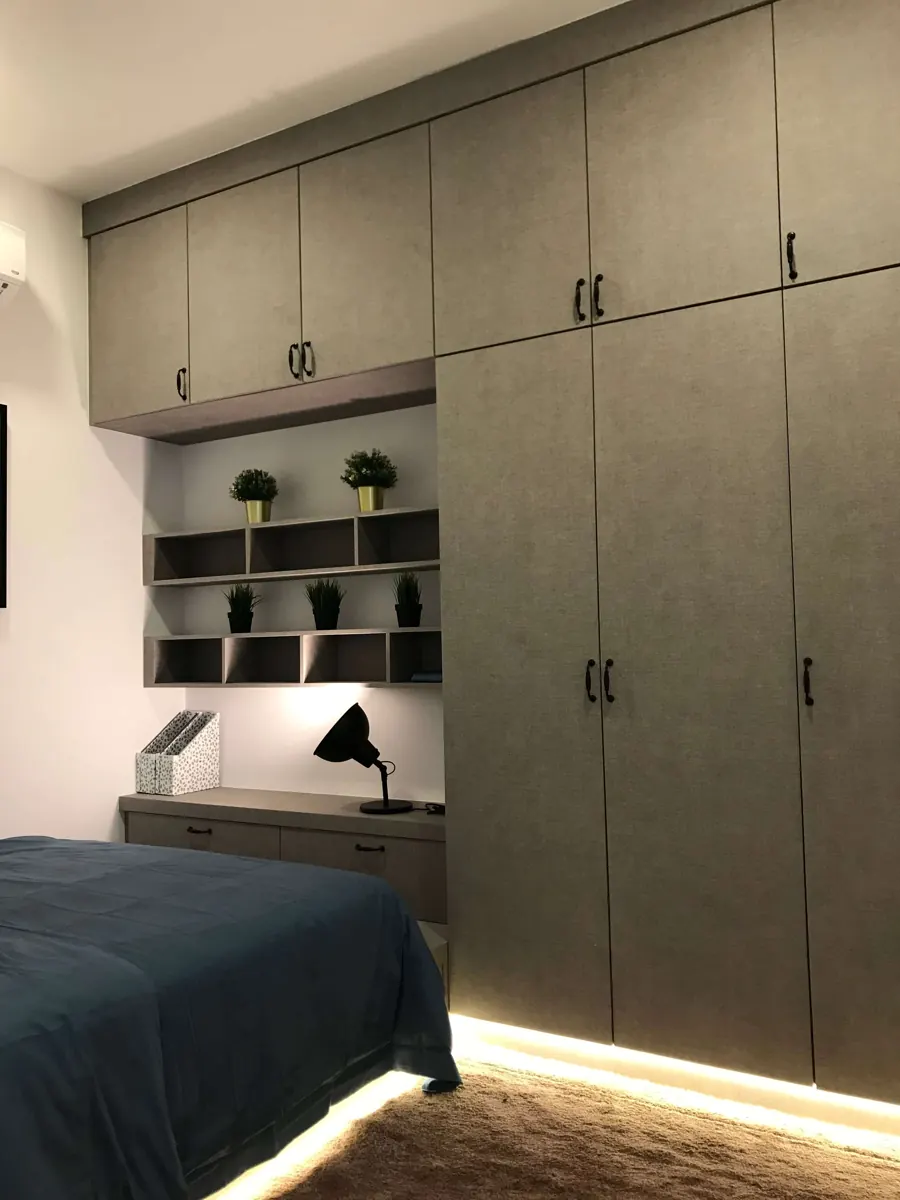
Fitted carpentry like this is measured after the walls are plastered and the floor is tiled.
Who will actually do the work, and who only coordinates?
Ask which trades the contractor does in-house and which are subcontracted, because that decides who is answerable when something goes wrong.
Some firms carry every trade: hacking, waterproofing, wiring, plumbing, tiling and carpentry. Others specialise and work alongside other trades. Neither is wrong, but you should know which one you are paying for.
We are a two-person carpentry workshop. We measure, draw every cabinet, cut and edge-band the boards in our own workshop, and the same two people install. We do not take the wet trades, but we coordinate the carpentry around them on a whole-house job.
If you are unsure whether you need a designer, a general contractor or a carpentry workshop, read interior designer vs renovation contractor first.
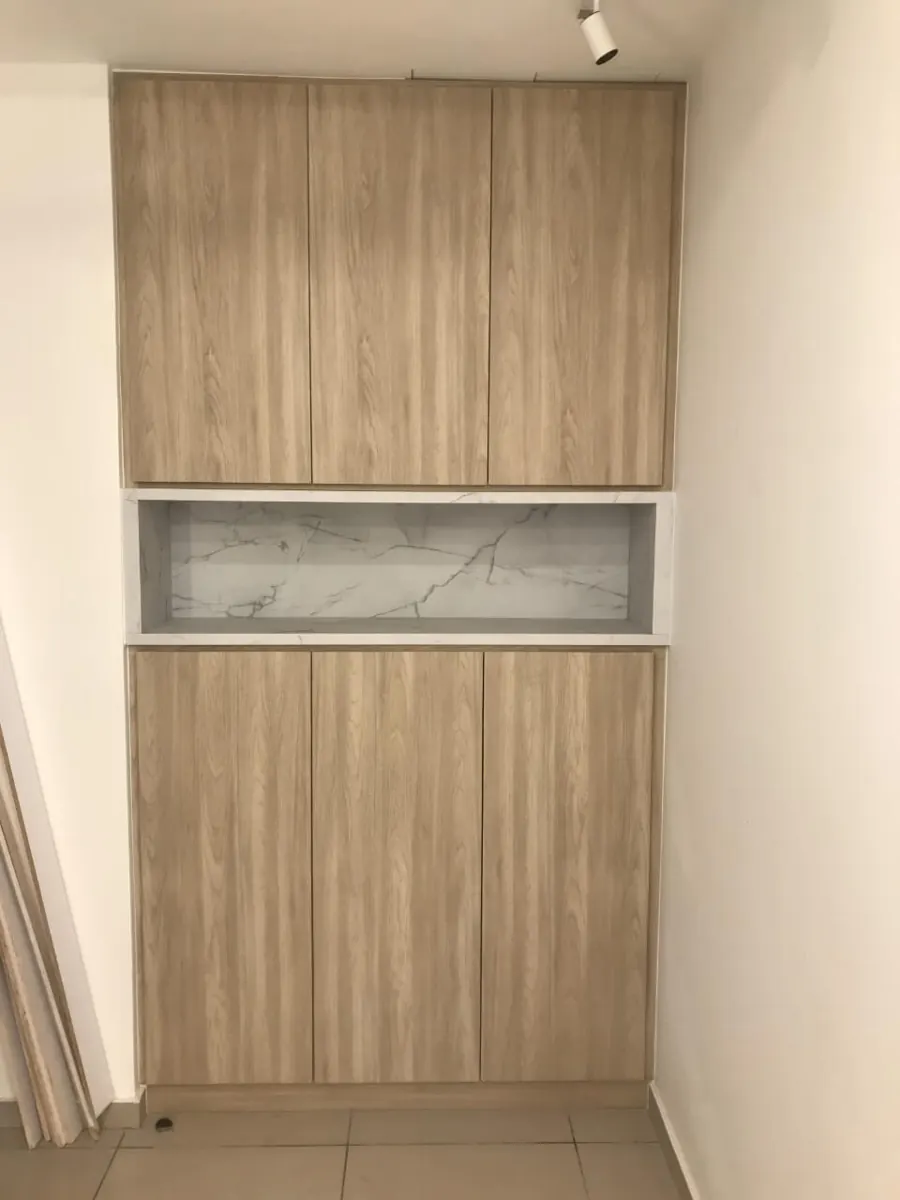
Printable checklist: before you sign
- Same written scope sent to every contractor
- SSM registration checked; name matches quotation and bank account
- Visited the workshop or a running job
- Name and number of the person on site
- Every line has quantity, unit and rate
- Board, finish and hardware named
- Exclusions listed
- Allowance lines have a stated specification
- Deposit amount and what it pays for, in writing
- Payment stages tied to finished work
- Extra work only with a signed price first
- Protection, debris and management forms agreed
- Defect period and what it covers, in writing
- 10% to 20% contingency kept in your own account
Get a quotation you can compare
If your job is mostly carpentry (kitchen, wardrobes, TV wall, shoe cabinet), send us your floor plan, photos and scope list and we will quote line by line, per foot, with exclusions on the same page. WhatsApp us or see how we work with homeowners in Seremban and nearby areas. If you want to know why we cut everything ourselves, read what factory-direct means.
Common questions about this topic
How do I know if a renovation contractor in Malaysia is genuine?
Ask for the company's SSM registration and compare three names: the one on the SSM document, the one on the quotation, and the one on the bank account you are asked to pay. They should match. Then ask to see the workshop or a job that is running now. A real business can show you both within a few days.
How much deposit should I pay a renovation contractor?
Pay a deposit that matches the materials being ordered for your job, against a signed quotation and an official receipt. The rest should be paid in stages tied to finished work you have inspected. Be careful with anyone who wants most of the contract sum before anything has been measured, cut or delivered.
What should a renovation quotation include?
Each line should show the item, the quantity, the unit (per foot, per square foot or per piece) and the rate. It should also name the board and finish, list what is excluded, and state the payment stages. A quotation with one lump sum for a whole room cannot be compared fairly with another contractor's.
Should I always pick the cheapest renovation quotation?
Only if all quotations cover the same scope and the same materials. The lowest price often leaves things out, such as hacking, debris removal, hardware or a thicker board, and those come back later as extra charges. Line up the quotations item by item before you look at the totals.
What is an allowance or provisional sum in a quotation?
It is a placeholder amount for something that has not been priced yet, such as tiles or a sink you have not chosen. The final bill for that line can go up. Ask what specification the figure assumes and what happens if you pick something more expensive, and get the answer in writing.