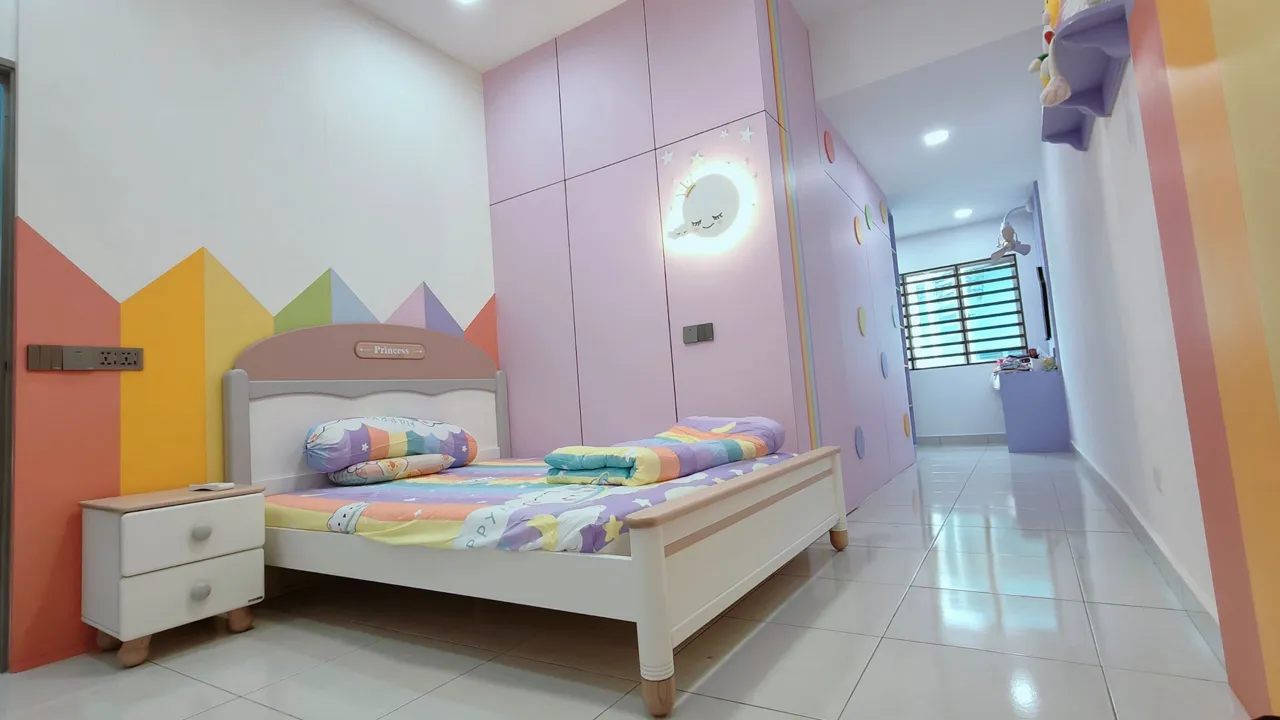
Most people only ever see their cabinets twice: as a drawing, and as a finished piece in their house. Everything in between happens somewhere they never go.
This article follows one job through that middle part. It is a pastel kids room in Seremban: a lilac wardrobe run with yellow and orange open shelves, and a lilac dressing table under the window. We photographed the same parts in our workshop and again after they were installed.
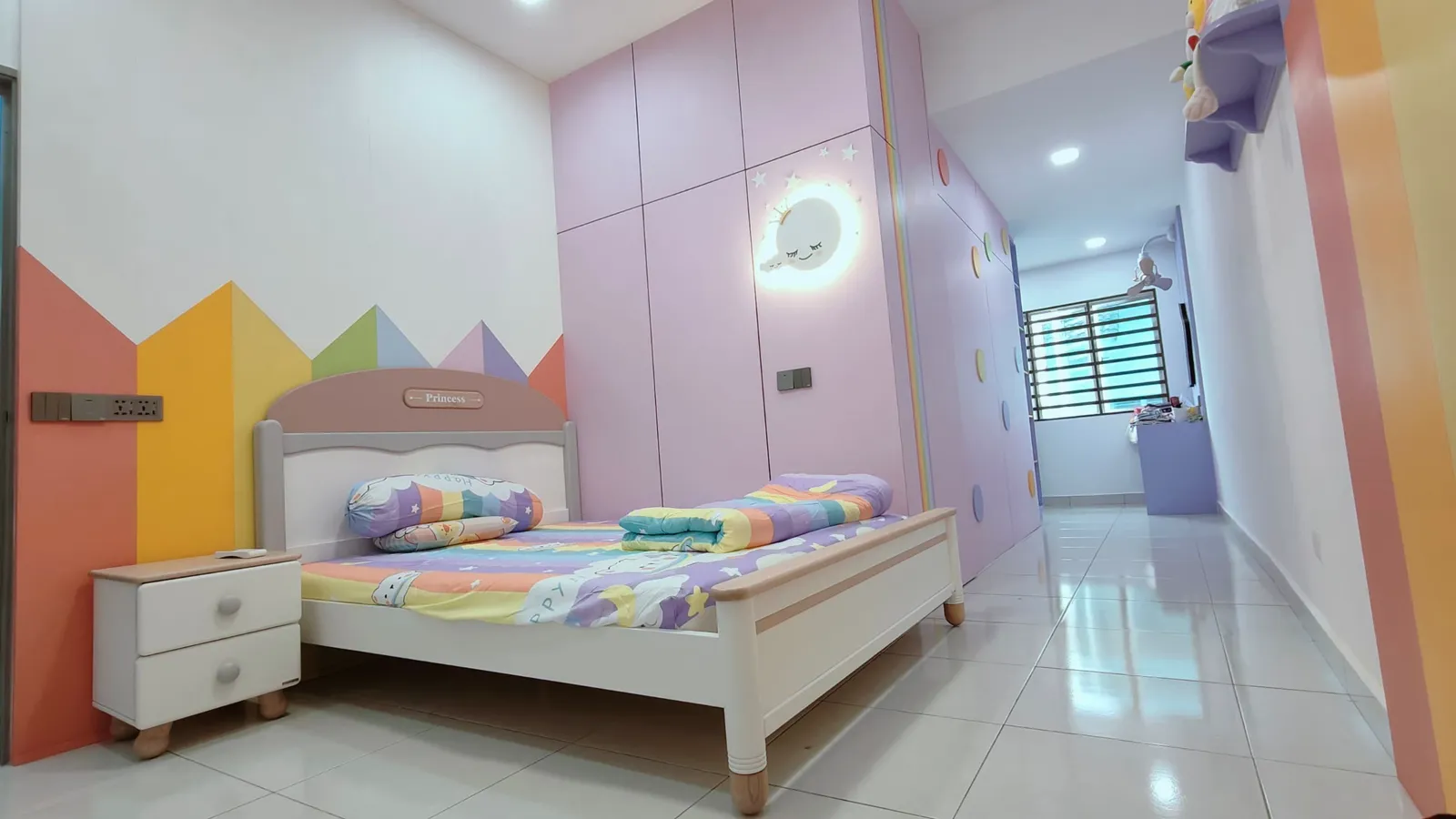
Our workshop is not a showroom
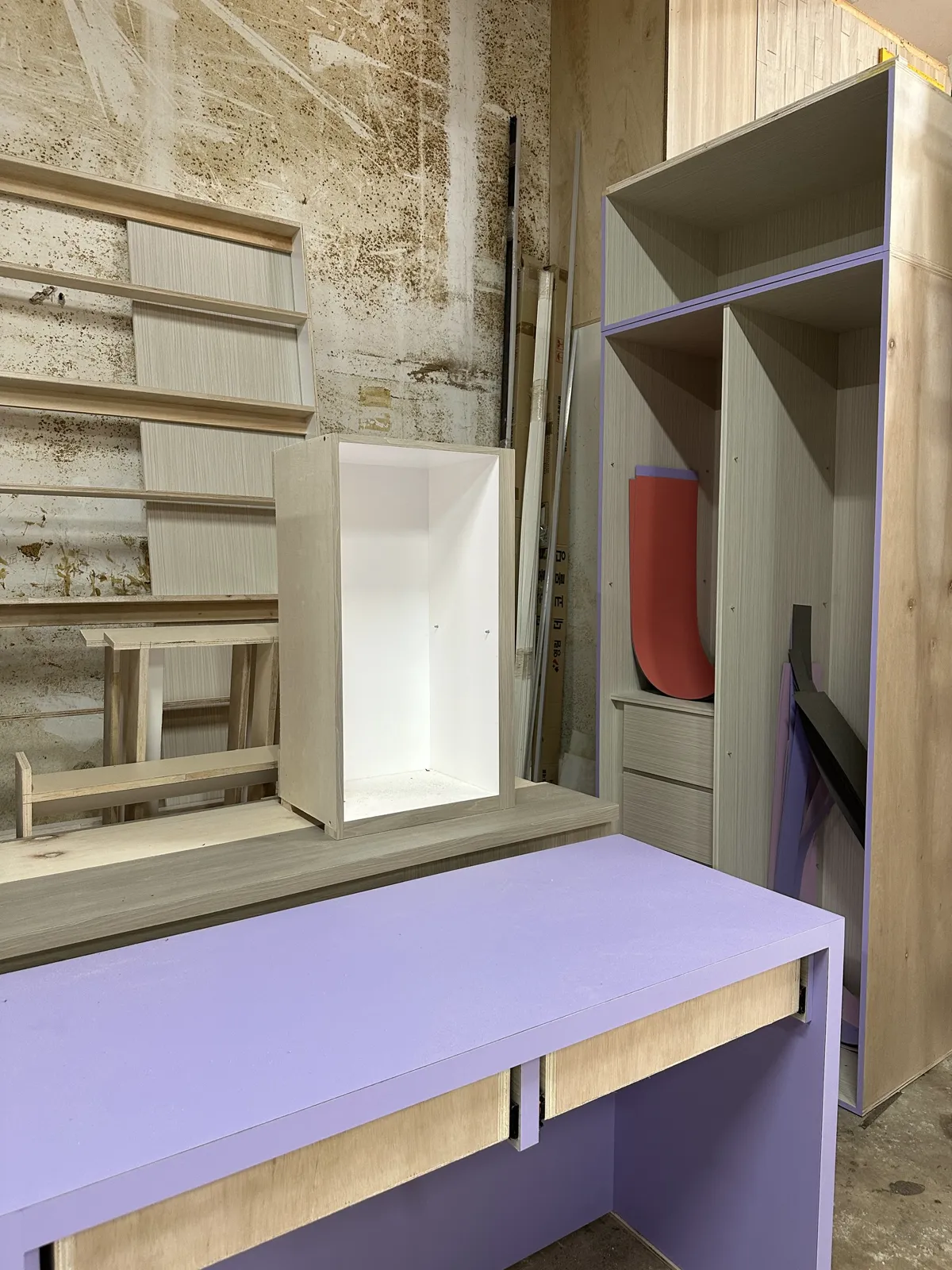
Our workshop is in Galla Industrial Park, Seremban. It is where the boards are cut, edged and put together, and it looks like it: sawdust on the floor and old walls. It is a working shop, not a display, and the work in this article was made there.
Step 1: Matching the edge banding
Edge banding is the strip that seals the cut edge of a board. It keeps moisture and knocks away from the core and makes the edge look finished.
For a single-colour kitchen, the edge is one colour. This room was different. The same batch of panels was lilac, pink, yellow and orange, and every strip had to match the board it went on. Each one is applied and checked one at a time.
It looks like a small thing, just an edge. But a lot of whether a cabinet looks good and lasts comes down to details like this.
Step 2: Carcasses built and dry-fitted in the workshop
The carcasses, the boxes that make up the cabinet, are built in the workshop. Then they are put together once beside the bench before anything is loaded, to check that the sizes are right and the doors swing properly.
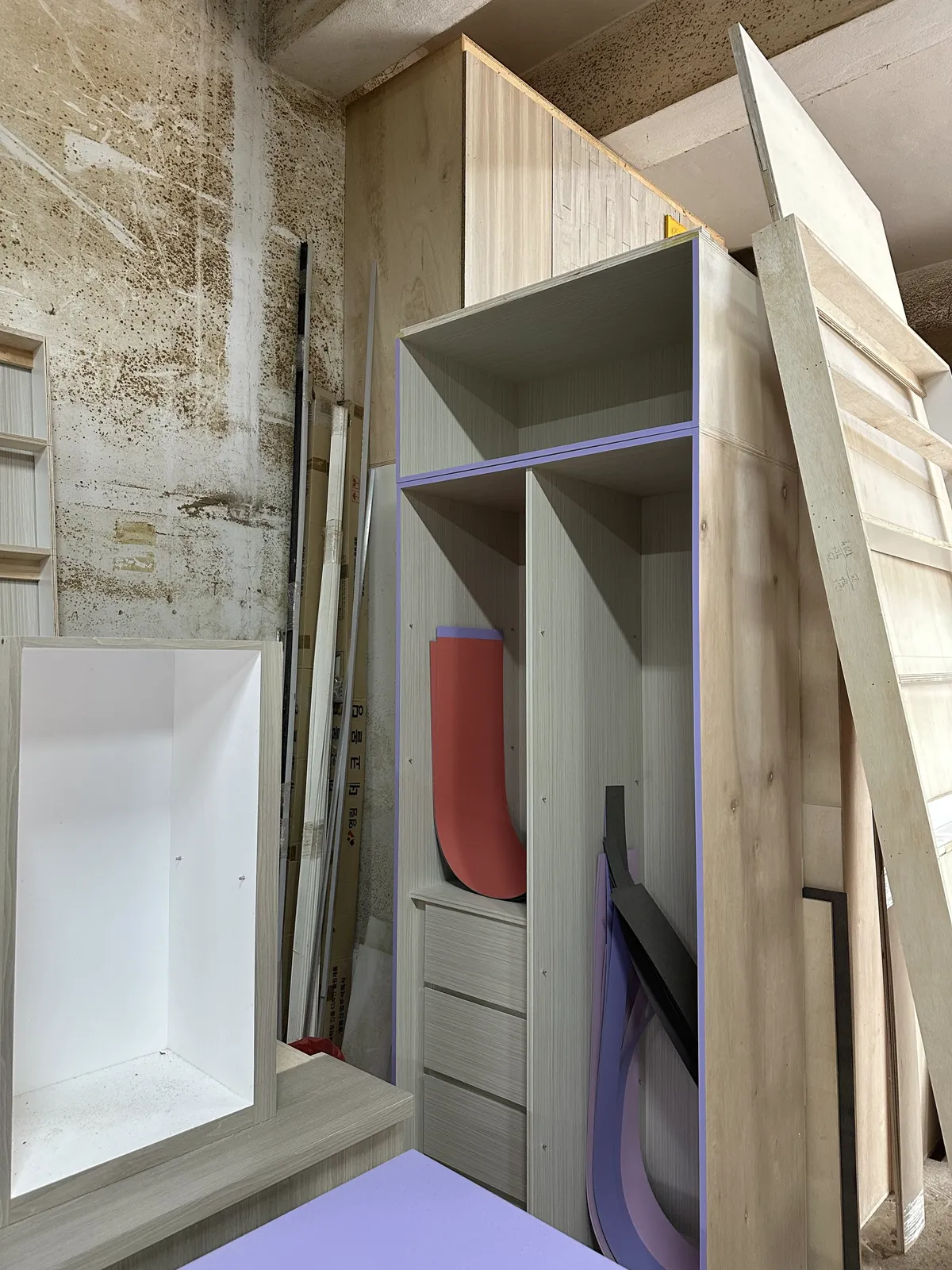
Only after that are they taken to the house.
Step 3: Still some trimming on site
Even with all that, some trimming happened on site. A little was cut and adjusted during installation.
That is not a mistake. Walls are never perfectly straight, and floors are not always level. A carcass built square in the workshop has to meet a room that is not quite square, and the last few millimetres are worked out there. Every house is a little different.
Colour inside, plain doors outside
There is one design decision in this room worth copying. The strong colours went inside: the yellow and orange are on the open shelves and the inner faces. The wardrobe doors stayed in soft pastels.
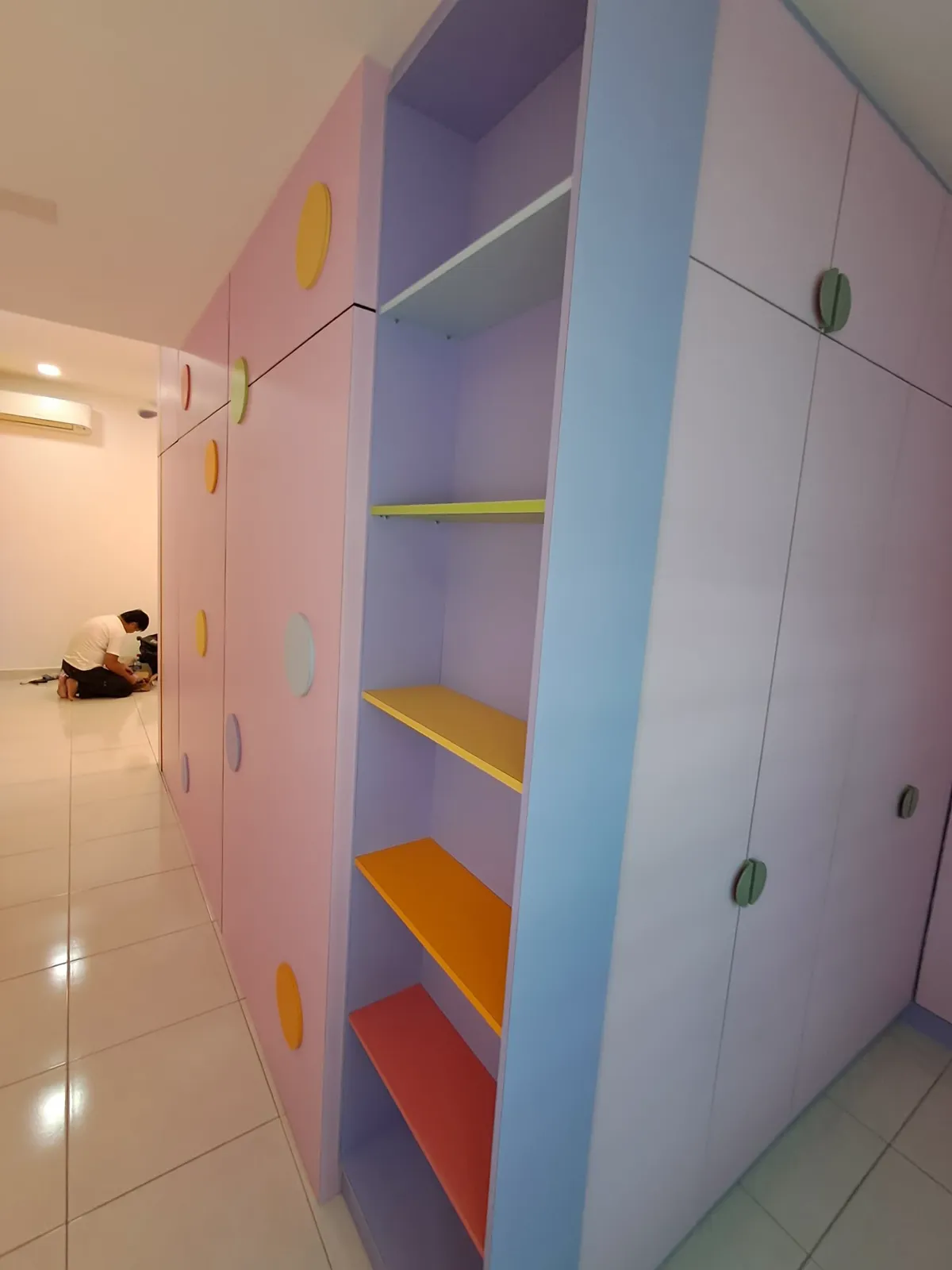
The reason is simple: children grow up. The colour inside shows when the doors open, and from outside the room still looks calm. In a few years, when the cartoon bedding is gone, the room still works without rebuilding.
The purple desk
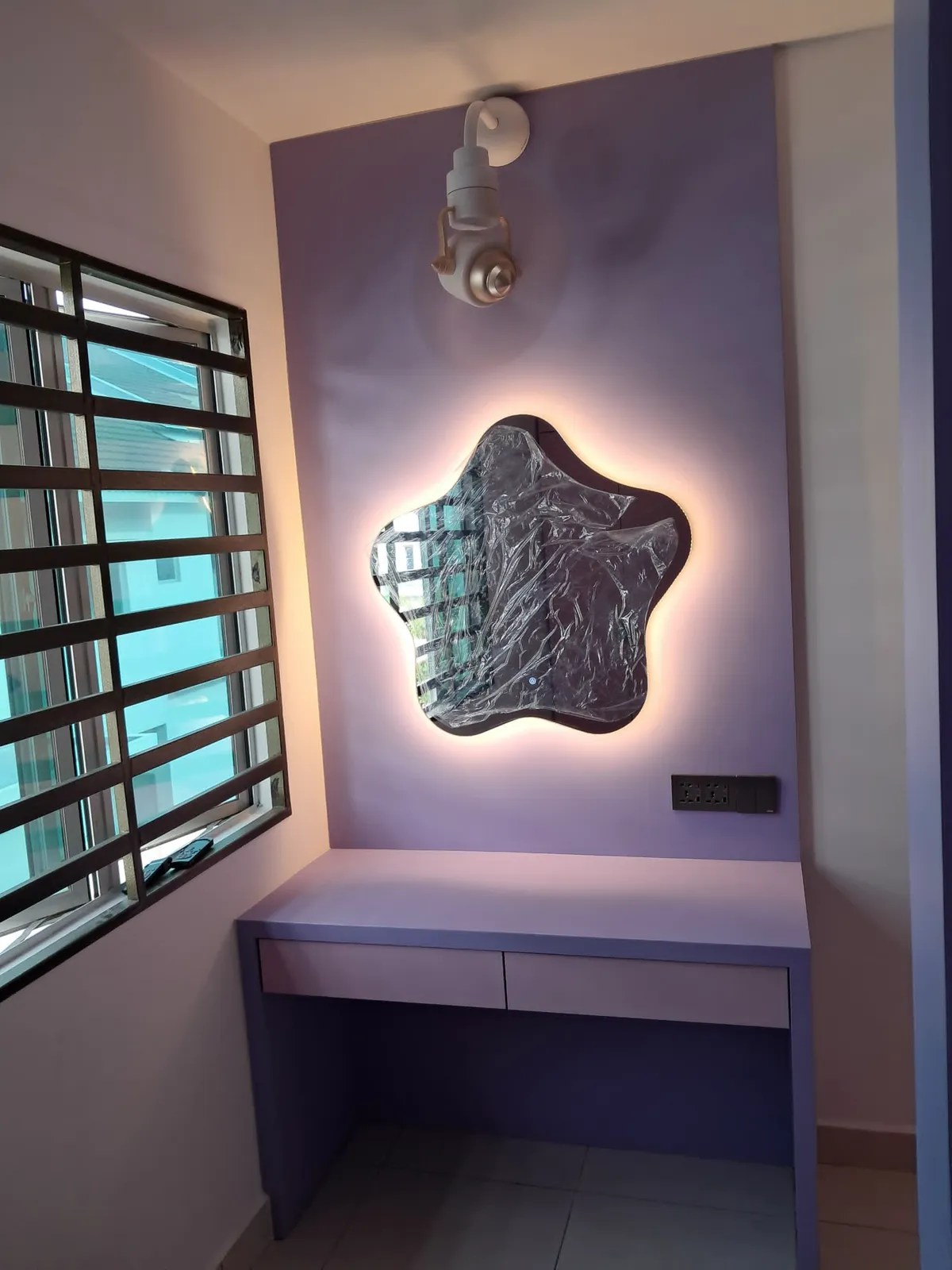
The lilac desk assembled in the workshop became the dressing table under the window, with a lit star-shaped mirror above it.
And then the child moved in.
Planning a kids room?
If you are planning a kids room, send us the room size and the colours your child likes on WhatsApp. We will work out where the colour should go, what lasts, and what it would cost, at our wardrobe and custom furniture prices. To read more about board choice, see our material guide.
Common questions about this topic
If the cabinets are made in the workshop, why is there still cutting on site?
Because walls are never perfectly straight and floors are not always level. The carcasses are built and dry-fitted in the workshop, but the last few millimetres are trimmed to the actual room during installation. That is normal, not a sign of a mistake.
What is edge banding?
It is the strip that seals the cut edge of a board. It protects the core from moisture and knocks and makes the edge look finished. In a colourful room every strip has to be matched to the colour of its panel.
Should a kids room wardrobe have colourful doors?
It can, but children grow up quickly. Putting the strong colours on shelves and inside faces, and keeping the doors to soft tones, keeps the room usable for longer without rebuilding.