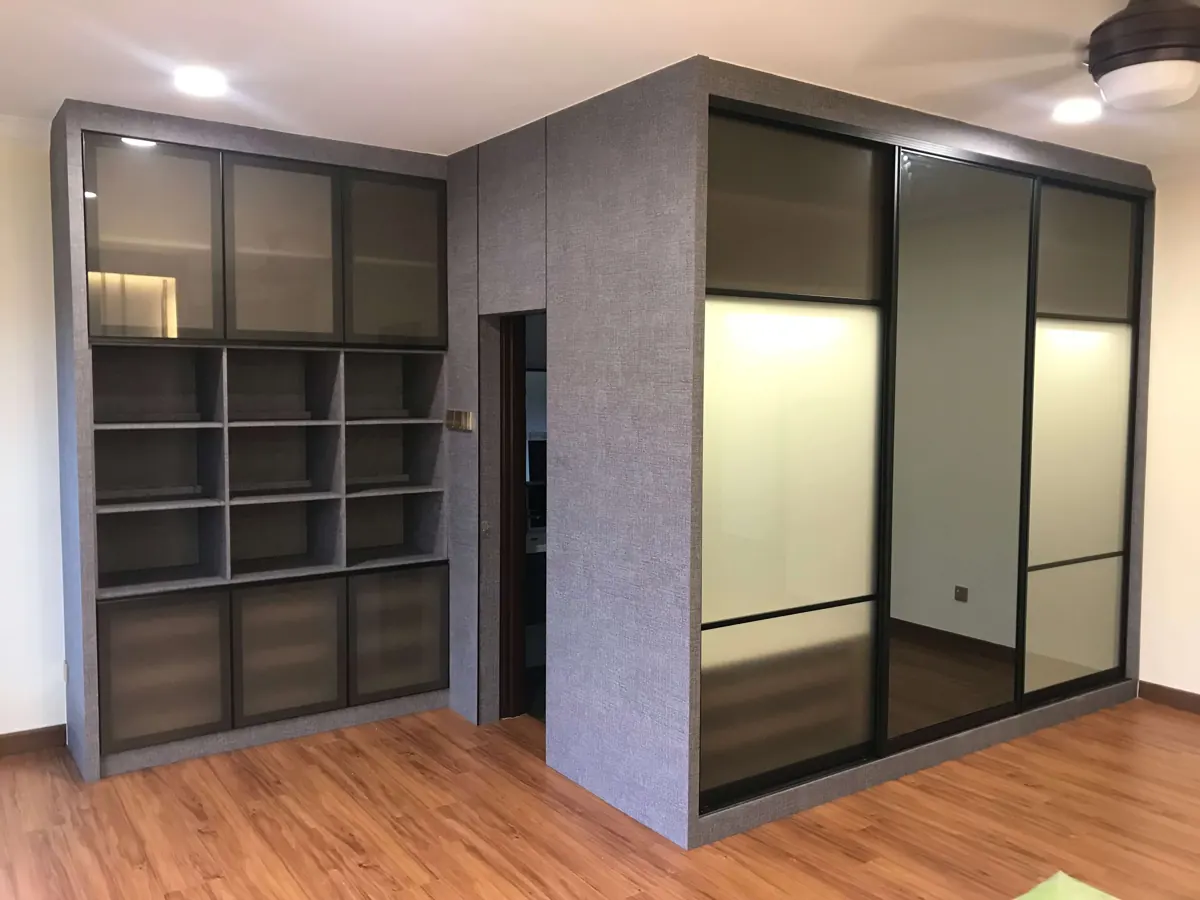
A built-in wardrobe in Malaysia usually costs RM3,000 to RM6,000 for a basic piece, according to PropertyGuru Malaysia's built-in furniture guide (2026). Your own price depends on four things: how wide it is, how tall it goes, which doors you choose, and what goes inside. A plain hinged wardrobe sits at the low end; a full-height unit with sliding glass doors and many drawers goes above it.
For our own work, Fatt Interior publishes a starting price: a 6-ft full-height wardrobe, floor to ceiling, from RM5,000, for homes in Negeri Sembilan and the Klang Valley. Your final price comes after we measure, and depends on size, material and hardware.
In short:
- The sourced anchor is RM3,000 to RM6,000 per basic built-in piece (PropertyGuru, 2026).
- Hinged doors cost the least. Sliding, glass and walk-in layouts cost more.
- Drawers, pull-out rails, lighting and mirrors are where the price climbs fastest.
- Ask for a quote that lists board, doors, fittings and top boxes separately.
How much does a built-in wardrobe cost in Malaysia?
PropertyGuru Malaysia's 2026 guide puts the average basic built-in at RM3,000 to RM6,000 per piece. It notes that the figure moves with how complex the build is and which materials are chosen.
For a whole bedroom, the same publisher's 2026 renovation guide gives RM10,000 to RM70,000 for living rooms and bedrooms together, with built-ins and custom carpentry pushing toward the top. That covers far more than a wardrobe, so use it only as an outer limit.
We could not find a wardrobe price per foot from an independent publisher that we were happy to quote. Many renovation firms publish their own per-foot rates, but those are sales figures, not market data. If someone quotes you per foot, ask what the foot includes (see the checklist below).
A note on kitchen rates: you may see cabinet prices per running foot online. Those figures are for kitchen cabinets, which are shorter and shallower. A wardrobe is a different box, so don't apply kitchen rates to it. Our kitchen cabinet price guide explains those numbers.
What is included in a wardrobe price?
A fair wardrobe quote covers the carcass (sides, back, top and base), the doors, the internal layout, the hardware, delivery and installation. If any of those is missing, the low price is only a starting point.
The parts that are often left off or priced separately:
- Top boxes above the hanging space, used for luggage and bedding.
- Filler panels that close the gap between the wardrobe and a wall that is not straight.
- Ceiling infill where a plaster ceiling or coving stops the carcass short.
- Handles, mirrors, internal lights and soft-close fittings.
- Removal of an old wardrobe and patching the wall behind it.
Hinged or sliding: which wardrobe door costs less?
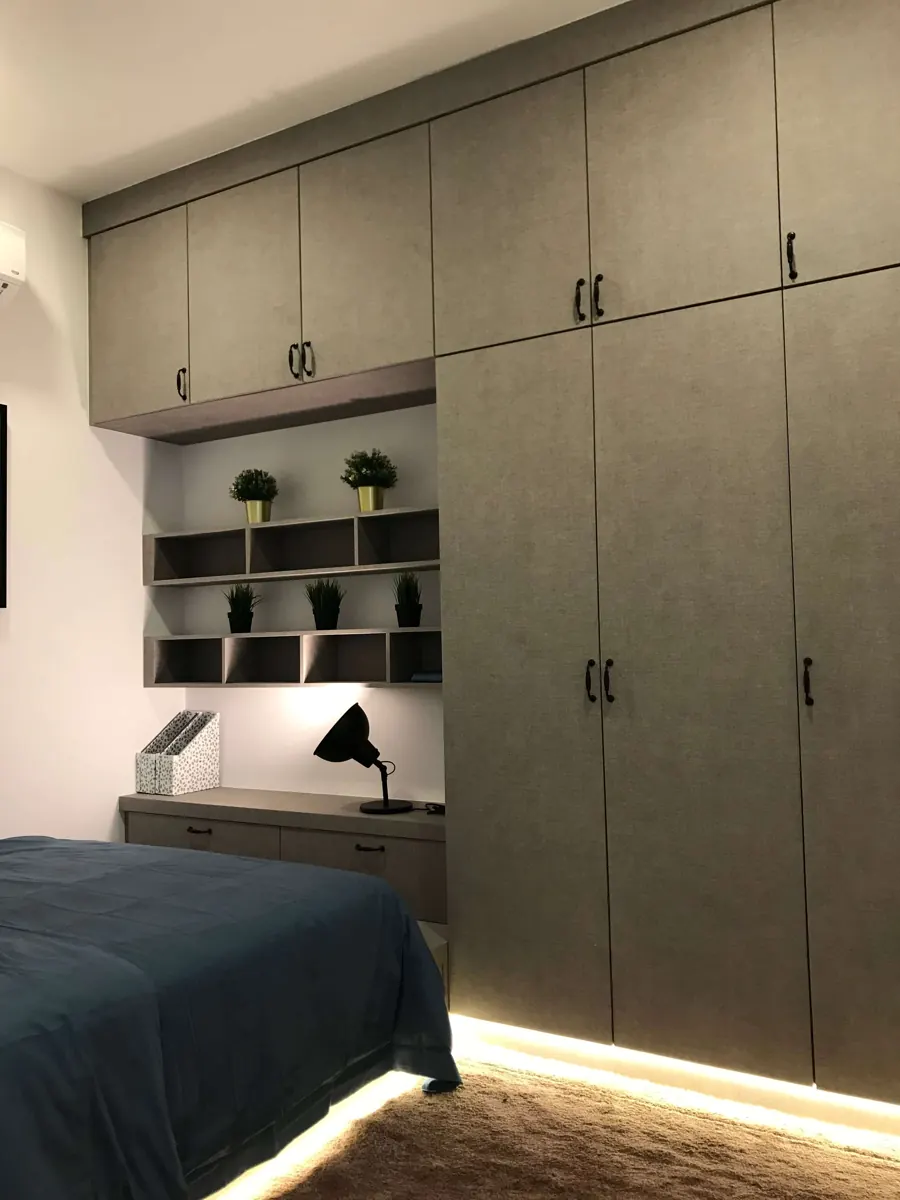
Hinged doors cost less for the same width of wardrobe. They need only panels and hinges, and they open the whole bay so you can see everything at once. The catch is that they need clear floor in front to swing.
Sliding doors save that floor space but add a track and rollers, and the quality of that running gear decides how well the doors still move in five years. Glass panels and framed doors raise the cost again. A walk-in has no doors to pay for, but it uses a whole room or a long run of one, and often adds lighting.
| Door type | Floor space it needs | Cost direction | What to watch |
|---|---|---|---|
| Hinged | A full door width of clear floor in front, plus room to stand | Lowest for a given width | Tall, heavy doors need good hinges or they sag |
| Sliding (bottom track) | Nothing in front | Higher: track and rollers add cost | You reach only about two thirds of the opening; the floor track collects dust |
| Sliding (top-hung) | Nothing in front, but a strong header above | Higher again | Needs solid structure overhead to carry the panels |
| Glass doors (hinged or sliding) | Same as the door type underneath | Higher than plain board doors | Shows the contents, so the inside needs to stay tidy |
| Open walk-in | A small room or a long wall run | Depends on size; no door cost, more fittings | Dust settles on open shelves |
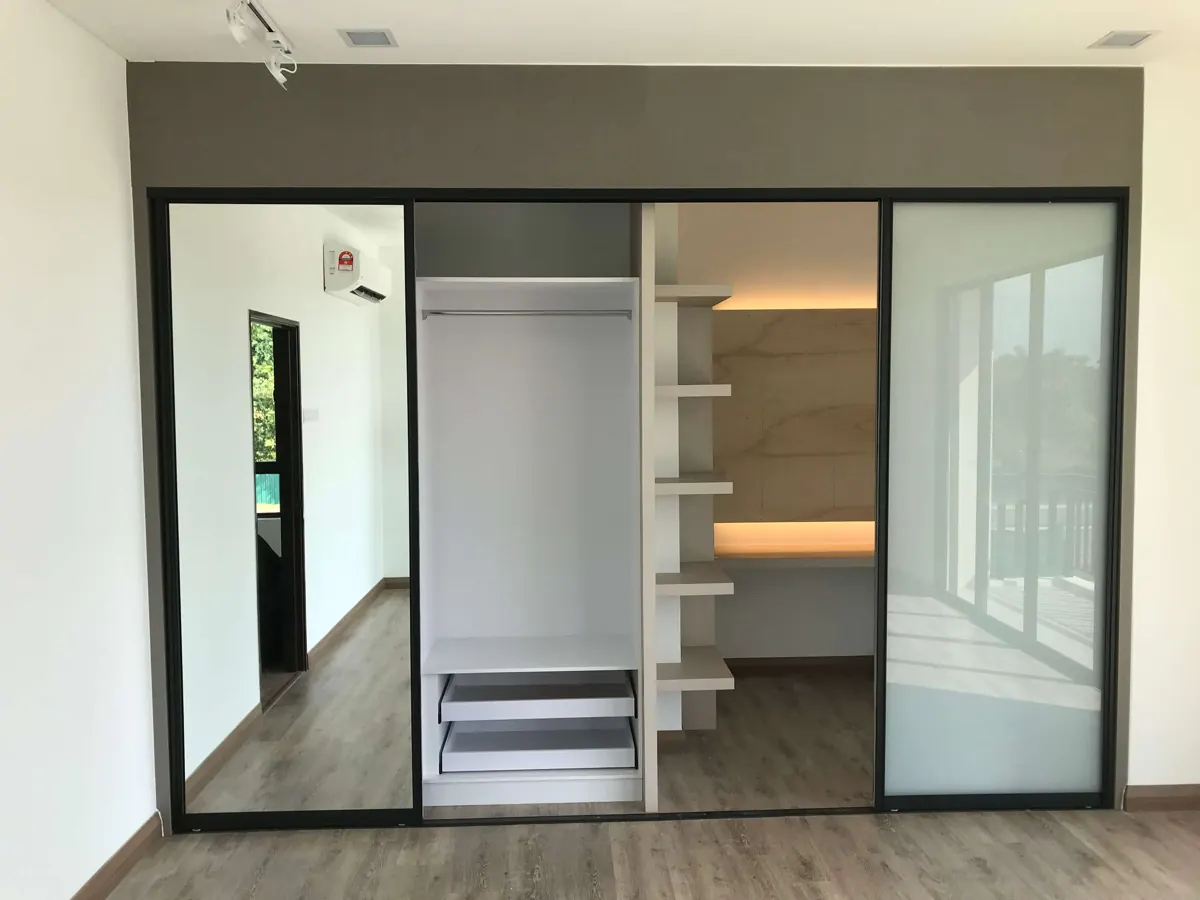
If your bed sits close to the wardrobe wall, or the bedroom door swings toward it, sliding is usually the practical choice even though it costs more. Our wardrobe service page compares each door type in more detail.
Which internal fittings add the most to the price?
Drawers and moving fittings add the most, because each one needs runners rated for the weight it will carry. Shelves and hanging rails are the cheapest parts of a wardrobe interior.
Roughly from cheapest to most costly:
- Fixed and adjustable shelves.
- Hanging rails, long hang for dresses and double hang for shirts and trousers.
- Shoe shelves and tie or belt fittings.
- Drawer stacks, which need good runners and soft-close if you want it.
- Pull-out rails in corner returns, so the corner does not become dead space.
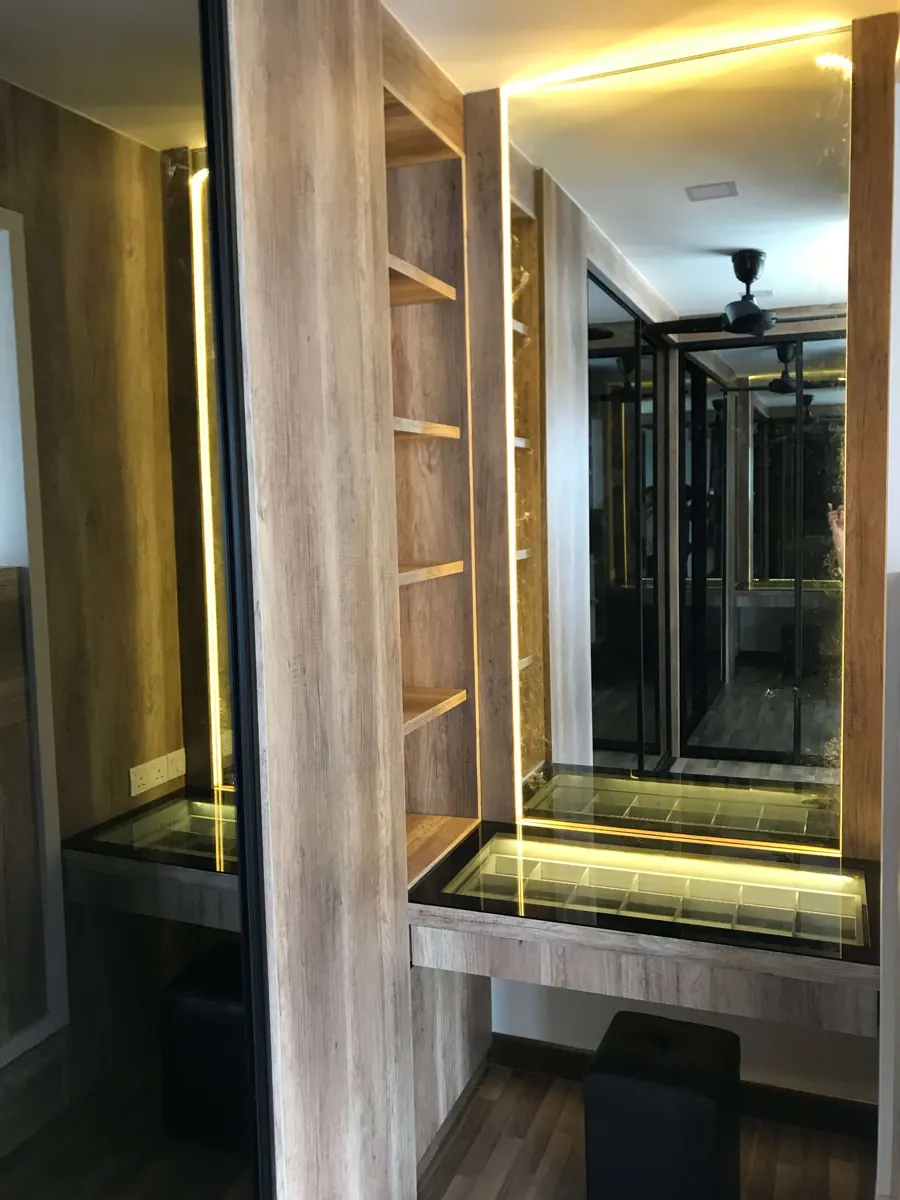
- Internal LED lighting, glass shelves and full mirrors.
A long rail will bow in the middle under a full bay of clothes, so a good layout breaks wide spans with a divider. That adds a little board but saves a repair later.
What material should a built-in wardrobe use?
We recommend a plywood carcass with a laminate (HPL) finish for bedroom wardrobes. Plywood holds hinge screws firmly after years of daily use, and laminate is hard-wearing and easy to wipe clean.
Bedrooms in Malaysia have their own moisture problem. An external wall that takes afternoon sun, or a room with air-conditioning running all night, can leave damp behind the wardrobe back. That is why we keep the carcass slightly off the wall and seal every cut edge before it leaves the workshop.
Cheaper boards will lower the quote, but they hold screws less well and swell if they get damp. Our material selection guide compares the common boards side by side, and the custom cabinet guide covers hinges and edging.
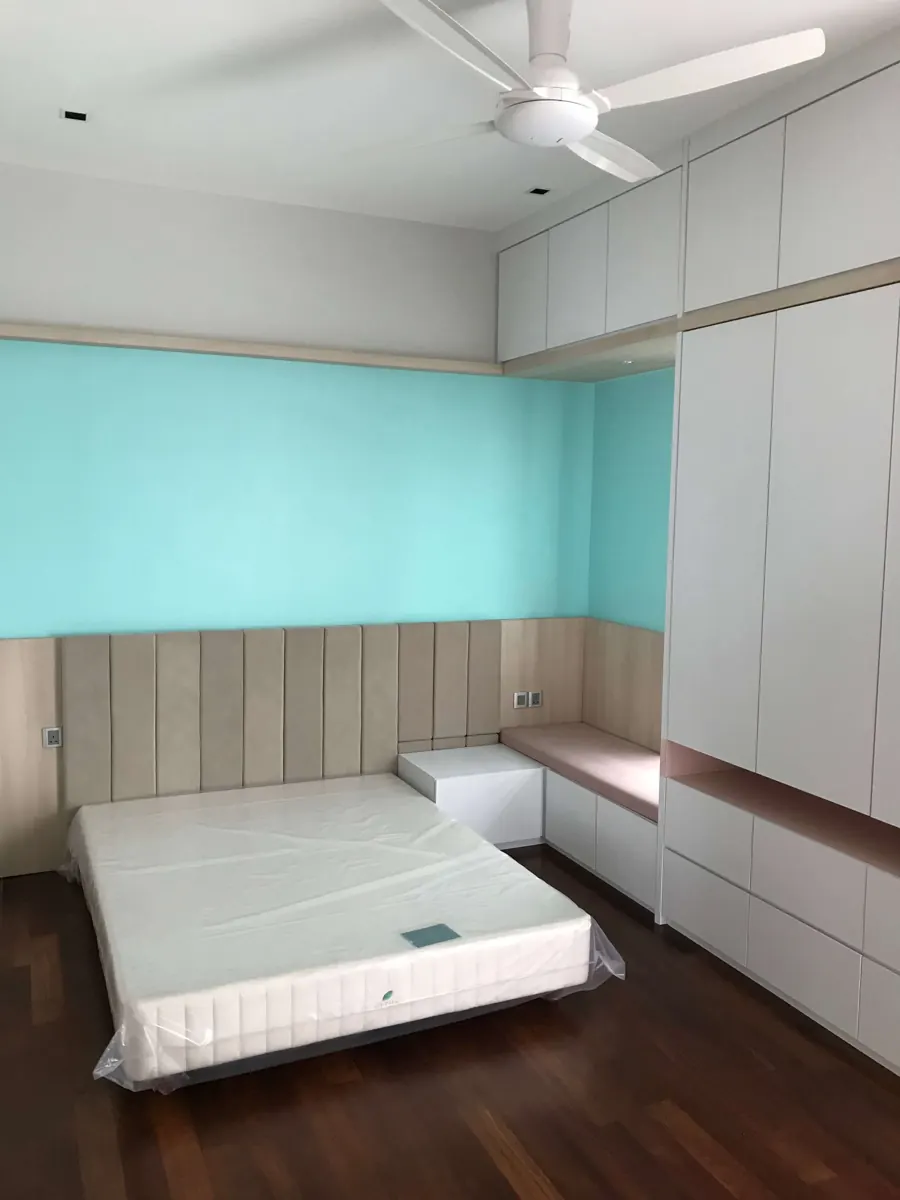
How do you measure for a built-in wardrobe?
Measure the width of the wall, the height from floor to ceiling, and anything that gets in the way: windows, switches, air-conditioners and the swing of the bedroom door. Write down the distance from the wardrobe wall to the bed as well.
A few tips before you ask for prices:
- Measure at three heights. Older walls are rarely straight, and the narrowest number is the one that counts.
- Note any plaster ceiling or coving, since it decides how tall the carcass can go.
- List what has to fit: feet of hanging space, number of drawers, pairs of shoes, and where the suitcases go.
- Take photos of the whole wall, including the ceiling line and the floor.
Your own measurement is for budgeting. The final measurement should be taken by the workshop after plastering and skirting are done, because a wardrobe is fitted to the finished wall. Our scale rule tool can help you read a floor plan.
What should you check on a wardrobe quotation?
Check that the quote names the board, the door type and every fitting, so you can compare like with like. Two quotes for the same width can describe very different wardrobes.
Before you pay a deposit, ask:
- What board is the carcass, and what thickness?
- What finish is on the doors: laminate, glass, or something else?
- Which brand of hinges, runners and sliding track?
- How many drawers, and are they soft-close?
- Are top boxes, filler panels and ceiling infill included?
- Are handles, mirrors and lights included or extra?
- Is delivery, installation and removal of the old wardrobe included?
- When will the final site measurement be taken?
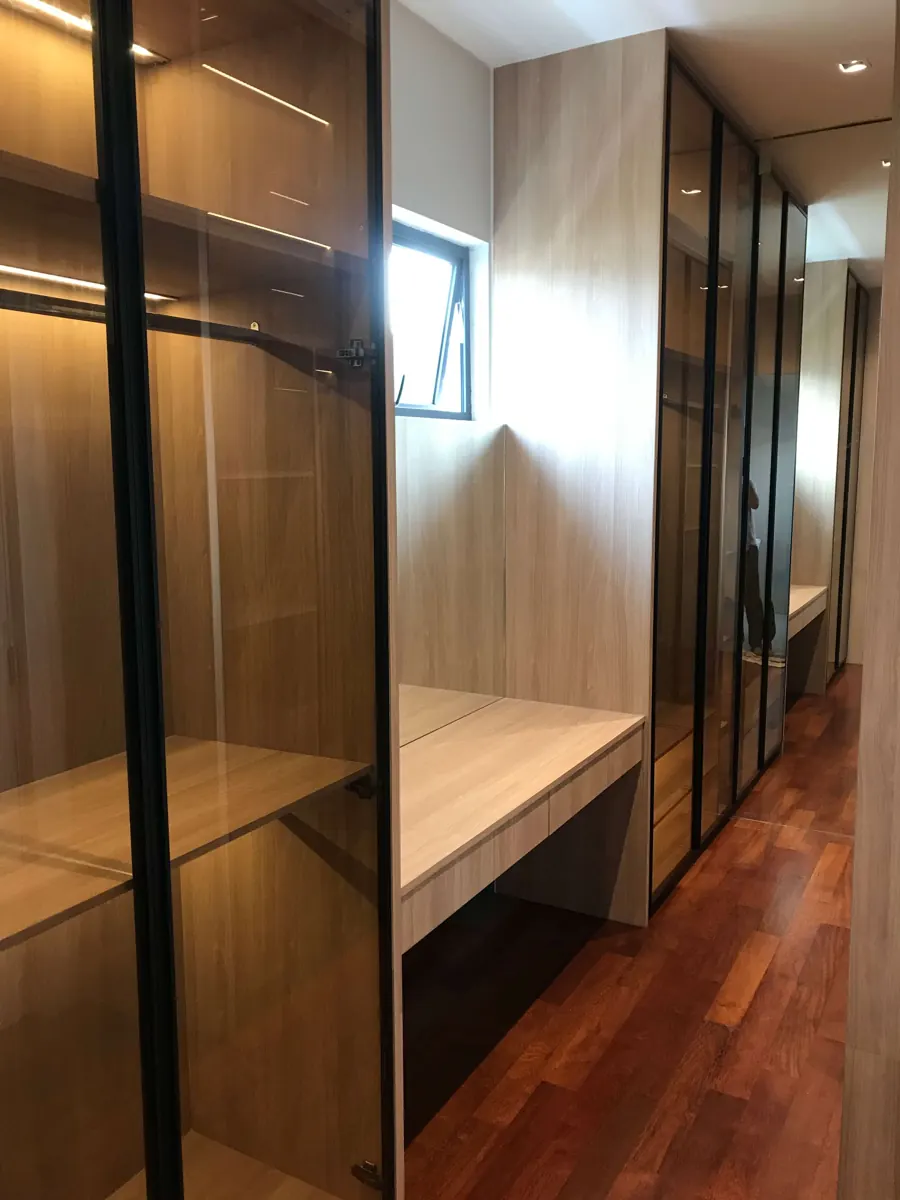
Get a wardrobe quote from our workshop
We measure your bedroom, draw the layout bay by bay, then cut and edge the boards in our own workshop in Galla Industrial Park, and the same team installs it. If you are planning built-in wardrobes in Seremban or nearby, send us your wall width, ceiling height and a few photos on WhatsApp, and we will tell you which door type suits the room before we price it.
Common questions about this topic
How much is a built-in wardrobe in Malaysia in 2026?
PropertyGuru Malaysia's built-in furniture guide (2026) gives RM3,000 to RM6,000 as the average for a basic built-in piece, with the final figure depending on how complex the build is and which materials are used. A wide, full-height wardrobe with sliding glass doors and many drawers will sit above that basic range. Fatt Interior's own published starting price is RM5,000 for a 6-ft full-height wardrobe; the final figure comes after measuring. Ask for a written quote based on your own wall.
Is a sliding wardrobe more expensive than a hinged one?
Usually yes. Hinged doors are the cheapest way to close off a given width of wardrobe, because they need only a carcass, door panels and hinges. Sliding doors add a track and rollers, and the quality of that running gear is a large part of the cost and of how long the doors run smoothly. Glass panels push the price up again.
Why do wardrobe quotes from two workshops differ so much?
Because the same width of wardrobe can hide very different work. Board type, door type, the number of drawers, the hinge and runner brands, top boxes and the filler panels that close gaps to an uneven wall all change the price. Ask each workshop to write these out line by line so you compare the same wardrobe, not just the same width.
Should a built-in wardrobe go up to the ceiling?
In most bedrooms, yes. The sides and back are being built anyway, so taking them higher mainly adds board and a top box, which is cheap storage for luggage and spare bedding. Stopping short leaves a dusty ledge. Where a plaster ceiling or coving gets in the way, a separate infill panel closes the last gap.
What is the best material for a wardrobe in a Malaysian bedroom?
Fatt Interior recommends a plywood carcass finished in laminate (HPL). Plywood holds screws and hinges well over years of daily opening, and laminate stands up to knocks and cleaning. Bedrooms with external walls or air-conditioning at night can trap damp behind a wardrobe, so sealed edges and a small gap to the wall matter as much as the board.