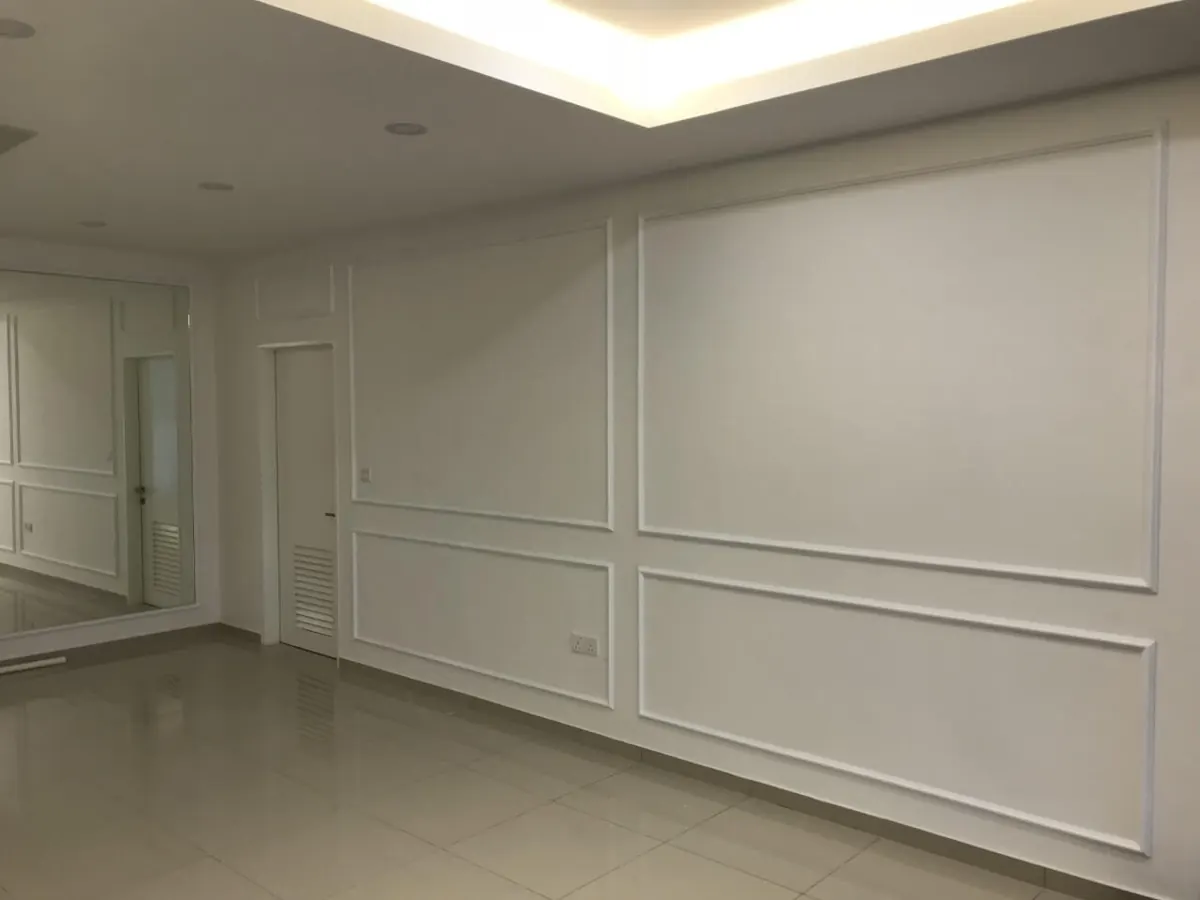
The first thing to do with a new house is not renovate. Inspect it, report every defect to the developer in writing, and let them repair it within the defect liability period. Then confirm what needs a permit, and renovate in this order: grilles, wet works, electrical, ceiling, painting, built-in carpentry, cleaning, then furniture.
In short:
- Report defects within 24 months of vacant possession. The developer must repair them within 30 days of your written notice (Lui & Bhullar, 2025).
- Don't hack or tile before defects are fixed. It can cost you the developer's repair.
- Inside carpentry rarely needs a permit. Extensions and structural work do.
- Carpentry goes in after the wet and dusty work, never before.
- On a budget, do the kitchen and wardrobes first. Feature walls can wait.
What should I do before any renovation work starts?
Before any contractor touches the house, do a full defect inspection and send the list to the developer in writing. This is your one chance to get cracks, hollow tiles, leaks and uneven floors fixed at the developer's cost.
Most new houses in Seremban 2, Sendayan and Nilai are sold under a Schedule G (landed) or Schedule H (strata) sale and purchase agreement. Law firm Lui & Bhullar (2025) explains that under these agreements the defect liability period (DLP) is 24 months from vacant possession, and developers must repair reported defects within 30 days of receiving notice.
What to check, room by room:
- Walls and ceilings: cracks, patchy paint, damp marks.
- Floor tiles: tap each one for a hollow sound, check for chips and uneven joints.
- Windows and doors: they close, lock and don't leak in rain.
- Plumbing: run every tap and flush, look under sinks, watch floor traps drain.
- Electrical: test every socket and switch, check the DB box labels.
- Roof and wet areas: water stains after rain, ponding on balconies and in bathrooms.
Photograph every defect with a date, number it on a floor plan, and keep a copy of what you submit.
Can renovation affect the developer's responsibility for defects?
Yes. The Edge Malaysia (2020) points out that a developer can refuse to repair defects it did not cause, for example damage from renovation done by the buyer after vacant possession. The same article advises letting the developer finish its repairs before you start renovating.
In practice, if a wall has been hacked or a floor retiled, it is hard to prove the crack or leak was there before. So document first, report first, and wait for the repair before booking wet works.
Built-in carpentry carries less risk because it does not open up walls or floors. Even so, our advice is the same: get the defect list closed, then measure.
Do I need a permit to renovate in Seremban or Nilai?
You usually do not need council approval for built-in carpentry inside the house, but you do for extensions and structural work. Kitchen cabinets, wardrobes and TV cabinets don't change the building, so they normally sit outside the permit process.
Majlis Bandaraya Seremban (MBS) is the council for Seremban and, since 1 January 2020, for Nilai too, after the Seremban and Nilai municipal councils merged. MBS states that owners who want to alter a house must apply and get approval first, through a registered architect or building draughtsman. For small jobs that do not involve the structure, it offers a miscellaneous small works permit.
Before you sign with anyone, check these:
- With MBS Building Control: rear or side extensions, a new porch roof, awnings, moving or removing walls, and anything that adds built-up area.
- With your developer or management: rules on front gates, grilles, awnings and façade changes, and for strata units, the management's renovation rules and deposit.
- With neighbours: MBS asks for neighbour consent where work touches a shared boundary.
If a contractor says a roof extension "doesn't need approval", ask MBS yourself. The rules are set by the council, not the contractor.
What is the right order to renovate a new house?
Work from the messiest jobs to the cleanest. Each step should leave the house ready for the next, so nothing finished gets damaged or redone.
- Grilles and security. The house will hold tools and materials for weeks.
- Wet works. Hacking, plumbing, waterproofing and tiling, including any kitchen wet-area changes.
- Electrical points. Add sockets for the kitchen, the TV wall and bedside tables while walls are open.
- Plaster ceiling. This sets the final ceiling height and lighting positions.
- Painting. Walls and ceiling, first coat at least.
- Built-in carpentry. Kitchen cabinets, wardrobes, shoe cabinet, TV cabinet.
- Touch-up and cleaning. Final paint touch-up after carpentry, then a full clean.
- Appliances and loose furniture. Hob, hood, fridge, sofa, beds.
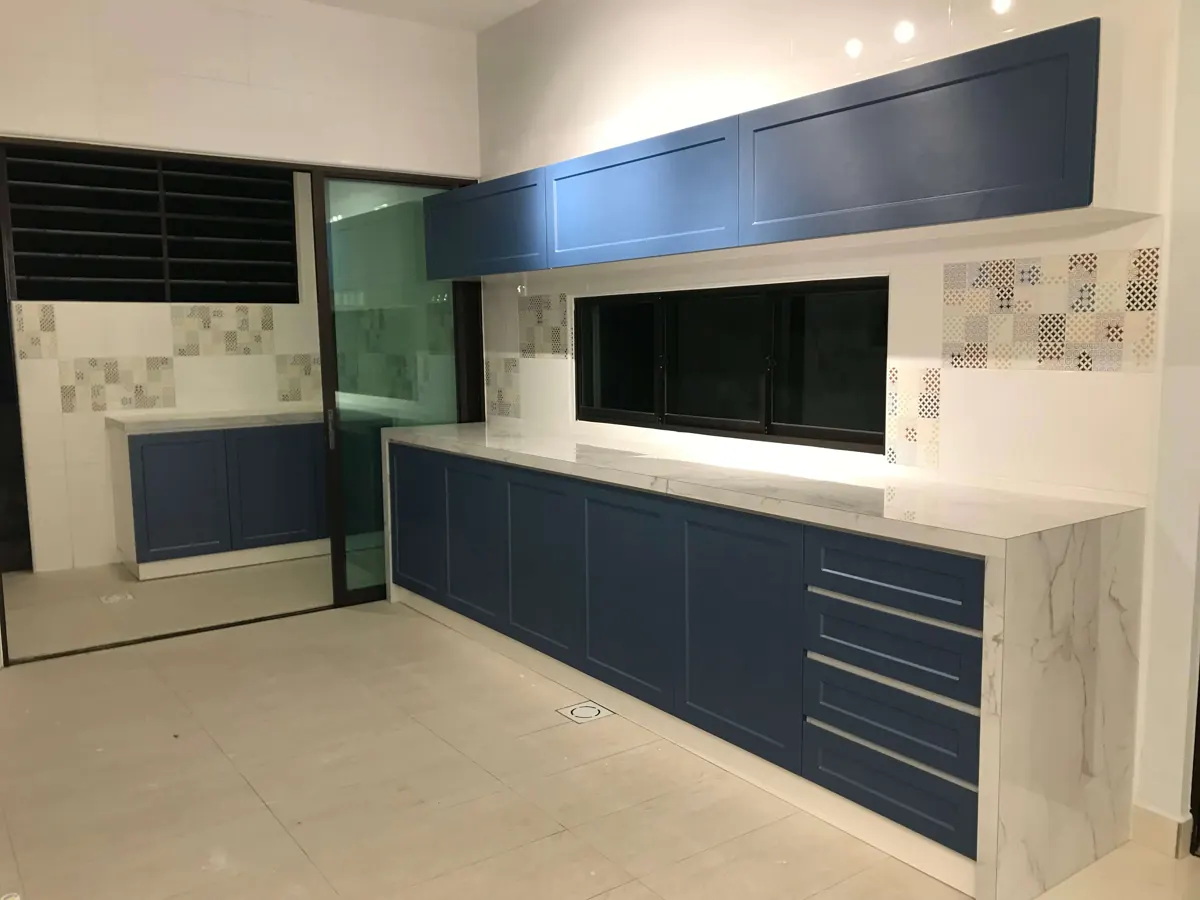
A kitchen goes in after the tiles, sockets and ceiling are done.
Why does carpentry go after wet works and the ceiling?
Carpentry goes after wet works because built-in cabinets are measured to the finished wall, floor and ceiling. If tiles are laid after we measure, every cabinet can end up a few millimetres too tall or too short.
Three practical reasons:
- Measurements change. New floor tiles raise the floor. A plaster ceiling lowers the top. Wall tiles in the kitchen change the depth.
- Dust and water. Hacking and tiling make fine dust and wet floors. Boards and laminate doors are better off arriving after that.
- Point positions. We plan cabinet layouts around sockets, water points and the hood vent. Those should already be fixed.
That is why we measure after tiling and ceiling, then cut and edge-band the boards in our own workshop. Still deciding between a straight, L or U kitchen? See which kitchen layout suits your house.
What should I prioritise on a tight budget?
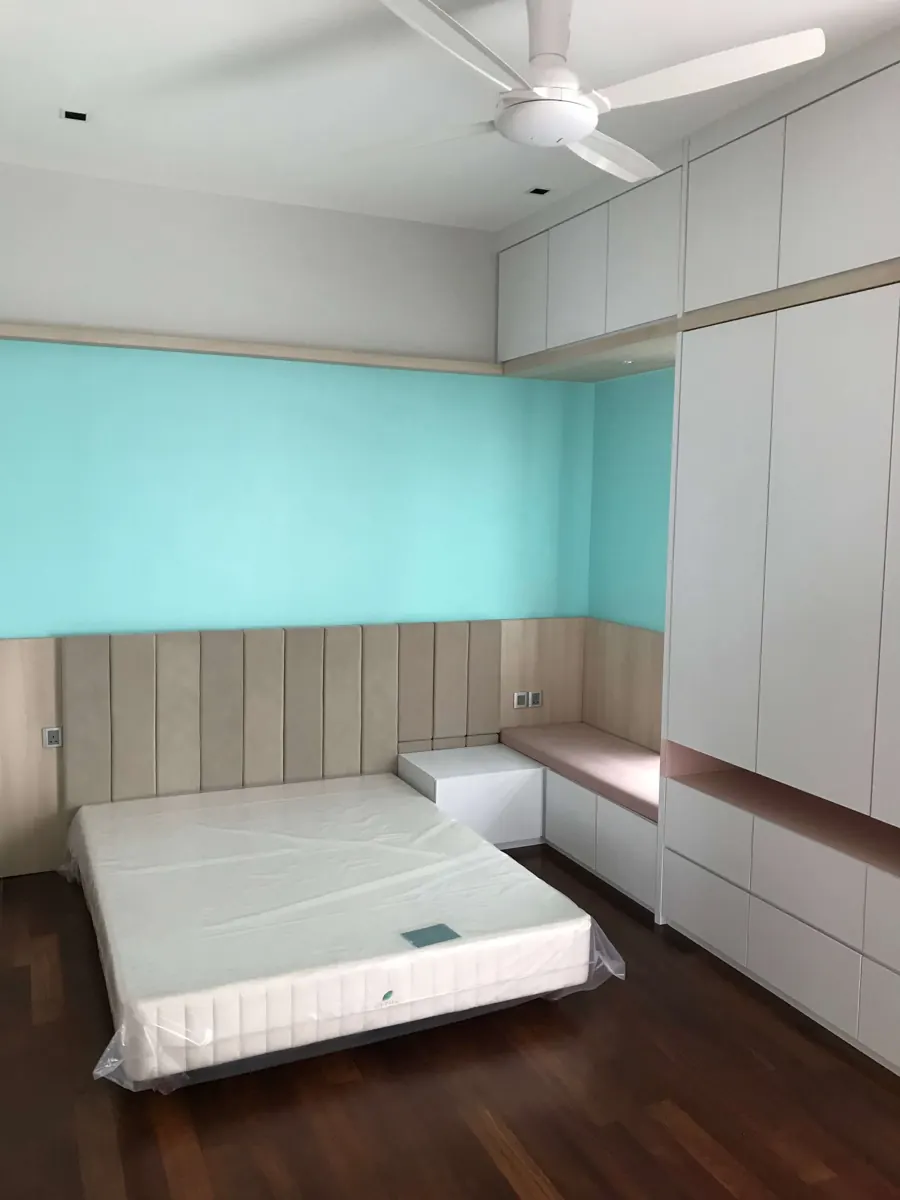
Do the kitchen and wardrobes first, because you use them every day and they are the hardest to add once you have moved in. Feature walls and display cabinets can wait a year without much disruption.
Published market ranges to plan with:
| What you are budgeting for | Published range | When to spend it | Publisher, year |
|---|---|---|---|
| The kitchen as one room | RM10,000 to RM100,000 | Before moving in | PropertyGuru Malaysia, 2026 |
| Living area plus bedrooms with built-ins | RM10,000 to RM70,000 | Wardrobes first, rest later | PropertyGuru Malaysia, 2026 |
| One simple built-in piece | RM3,000 to RM6,000 | Shoe cabinet, TV cabinet when ready | PropertyGuru Malaysia, 2026 |
| Plywood cabinet, each running foot | RM330 to RM600 | Kitchen and wardrobes | AmpQuartz, 2026 |
| Money kept aside for surprises | 10 to 20% of the total | Hold until handover | PropertyGuru Malaysia, 2026 |
Fatt Interior's own figures: our smallest kitchen, 10 feet of top and bottom cabinets finished with a laminate worktop, begins at roughly RM 9,000. An L-shape or a longer run topped in quartz or sintered stone usually lands between RM15,000 and RM50,000, depending on length and the top you pick. For a landed house, our renovation jobs usually take 4 to 8 weeks, depending on scope.
For a fuller breakdown by room, read renovation cost in Seremban.
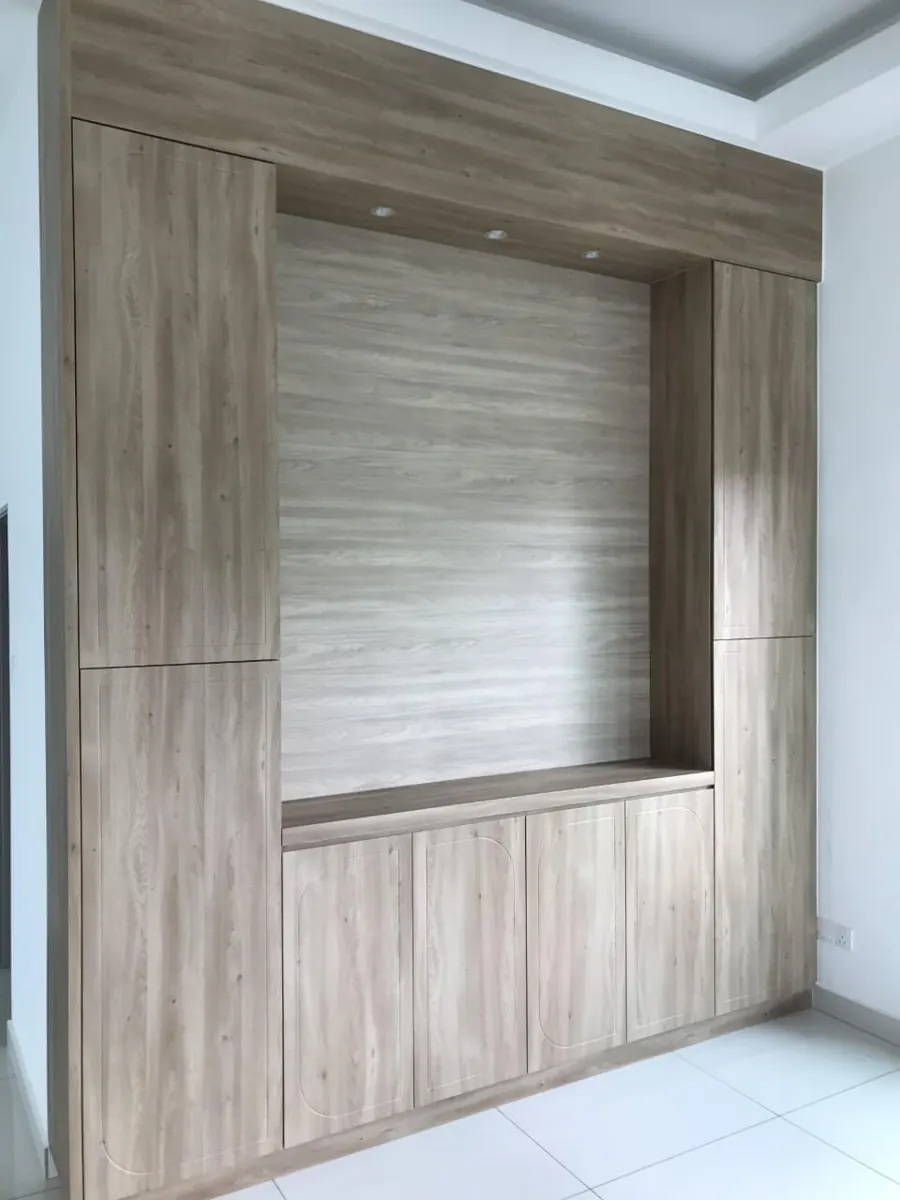
A simple order of spending when money is tight:
- Kitchen cabinets and top.
- Master bedroom wardrobe.
- Grilles and any must-have electrical points.
- Shoe cabinet and other bedroom wardrobes.
- TV wall, feature walls and display units later.

Printable new house renovation checklist
| Step | Who does it | When |
|---|---|---|
| Defect inspection and photos | You, or a hired inspector | First week after keys |
| Submit defect list in writing | You, to the developer | As soon as inspection is done |
| Developer repairs | Developer | Within 30 days of notice |
| Check permits and house rules | You, with MBS and developer or management | Before signing any contractor |
| Grilles and security | Grille contractor | After defects are fixed |
| Wet works: hacking, plumbing, waterproofing, tiling | Renovation contractor | After grilles |
| Electrical points | Licensed electrician | Before ceiling and painting |
| Plaster ceiling | Ceiling contractor | After wiring |
| Painting | Painter | After ceiling |
| Site measurement for carpentry | Carpentry maker | After tiles and ceiling |
| Built-in kitchen, wardrobes, shoe cabinet | Carpentry maker | After painting |
| Touch-up and full cleaning | Painter and cleaners | After carpentry |
| Appliances and loose furniture | Suppliers, you | Last |
Before you pay a deposit to anyone, read how to choose a renovation contractor.
How Fatt Interior can help
We handle the carpentry side of a new house: we measure after your tiles and ceiling are done, draw every cabinet, make it in our Galla Industrial Park workshop and install it with the same team. We work across new estates in Sendayan, Seremban 2 and Seremban, and can coordinate a full renovation or just your kitchen cabinets. WhatsApp us your floor plan and key handover date, and we can plan the measurement around your other trades.
Common questions about this topic
What should I do first after getting the keys to a new house in Malaysia?
Inspect the house for defects before any contractor starts work. Under Schedule G and H sale and purchase agreements you have 24 months from vacant possession to report defects, and the developer has 30 days from your written notice to fix them (Lui & Bhullar, 2025). Photograph everything, submit the list in writing, and let the developer finish repairs before hacking or tiling.
Can renovation affect my defect claim against the developer?
Yes. The Edge Malaysia (2020) notes that a developer can refuse to repair defects it did not cause, such as damage from renovation work done by the buyer after vacant possession. If a contractor has already hacked a wall or retiled a floor, it becomes hard to prove the crack or leak was there from the start.
Do I need a council permit to install a kitchen cabinet or wardrobe in Seremban?
Built-in carpentry inside the house, such as a kitchen cabinet or wardrobe, does not usually need council approval because it does not change the building. Extensions, structural changes and external additions are different. Majlis Bandaraya Seremban asks owners to get approval first, and offers a small works permit for minor non-structural jobs. Check with its Building Control Department before you start.
In what order should I renovate a new house?
Work from the dirtiest jobs to the cleanest. Start with grilles, then wet works such as hacking, plumbing, waterproofing and tiling, then electrical points, plaster ceiling and painting. Built-in carpentry like the kitchen and wardrobes comes after that, followed by touch-up and cleaning, and finally appliances and loose furniture.
How long does a new house renovation take in Seremban?
At Fatt Interior a typical landed-house renovation takes 4 to 8 weeks depending on scope. A house that only needs a kitchen, wardrobes and a few built-ins sits at the short end. Adding wet works, a new plaster ceiling and extra electrical points pushes it towards the long end. Defect repairs by the developer happen before this clock starts.